June has provided a fresh snapshot of the momentum behind Valencia’s innovation ecosystem. The city has climbed international rankings, strengthened its public artificial intelligence strategy, and attracted new investment, industrial projects and corporate partnerships in areas including photonics, space technologies, cybersecurity, digital health and agrifood innovation.
The milestones achieved over recent weeks reflect progress that goes well beyond quantitative growth. Valencia is becoming increasingly specialised in strategic technologies, strengthening its ability to bring scientific knowledge to market, and expanding its connections with corporations, investors and international cities. At the same time, innovation is becoming more deeply embedded in public policy, urban services and traditional industries seeking new models of competitiveness.
Valencia enters the world’s Top 70 emerging ecosystems
One of the month’s most significant achievements came with the publication of the Global Startup Ecosystem Report 2026, produced by Startup Genome. The report places Valencia between 61st and 70th among the world’s leading emerging startup ecosystems, making it Spain’s third-ranked city after Madrid and Barcelona.
The city’s progress has been particularly remarkable. Valencia ranked 91st–100th in 2024, improved to 81st–90th in 2025, and has now entered the Top 70, climbing around twenty places in just two years. The report also highlights a 122% increase in ecosystem value compared with the 2021 benchmark period.
Valencia now ranks among Europe’s Top 30 ecosystems for affordable talent and funding dynamism, the Top 35 for artificial intelligence activity, and the Top 50 for talent strength and retention. This progression confirms that the city is not only increasing the number of startups it hosts, but is also developing internationally recognised capabilities in investment, talent and high-value technologies.
VDS increases its economic impact and international reach
The VDS 2025 Impact Report has provided further evidence of the economic contribution made by Valencia’s technology ecosystem. Produced by Startup Valencia and EY-Parthenon, the study estimates that the latest edition generated €26 million in economic activity, representing a 29% increase compared with the previous year.
This impact includes €1.9 million in direct economic activity, €19.8 million in indirect impact and €4.4 million in induced impact. The estimated contribution to GDP exceeded €11.6 million, while the return on investment reached €14 for every euro invested in organising the event. Each attendee generated an average of €2,119, and the event supported the equivalent of more than 2,209 full-time monthly jobs.
The event’s business dimension also continues to expand. VDS brought together more than 3,000 startups, 1,500 corporations and 800 investors managing assets worth more than €300 billion. Participating startups estimated they would raise more than €560 million following the event, while companies that have taken part in VDS since 2018 have collectively secured more than €26.75 billion in funding.
The next edition is already surpassing previous records. VDS 2026 closed its Call for Speakers with more than 1,450 applications from 82 countries, compared with 1,100 applications from 78 countries the previous year. This growth of almost 32% further strengthens the international profile of the event, which will take place on 21 and 22 October under the theme Origin of What’s Next.
Valencia City Council has also launched a call to enable 24 local startups to participate in the Valencia Innovation Capital exhibition space at VDS 2026. Selected companies will receive exhibition space, access to the pitch corner, event passes and institutional visibility before investors, corporations and other international stakeholders.
Valencia strengthens its public artificial intelligence strategy
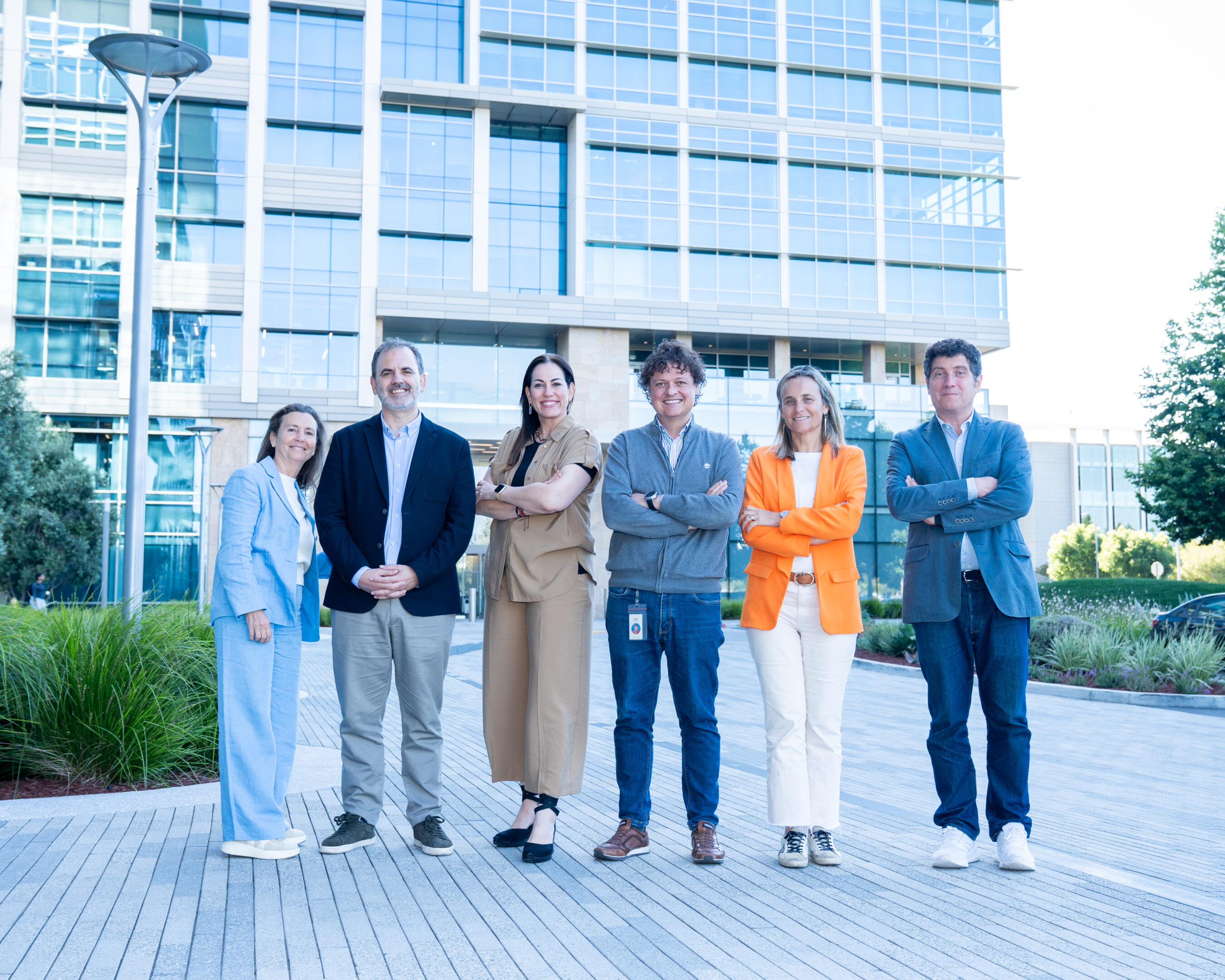
Artificial intelligence has also taken centre stage in the city’s agenda. Valencia presented its AI and technology entrepreneurship strategy in Silicon Valley during a mission led by Valencia City Council, together with Startup Valencia and the Valencia Chamber of Commerce.
The agenda included meetings with OpenAI, Meta, HP, PayPal, Anthropic, NVIDIA, Stanford University, Plug and Play, and the GovAI Coalition led by the City of San José. The objective was to learn from international models, share Valencia’s own initiatives and establish new avenues for collaboration in AI for public services, technology governance, talent development and open innovation.
The city has also approved its first Municipal Charter on Artificial Intelligence, establishing principles for introducing AI into public administration in an ethical, secure and people-centred way, with human oversight, transparency and respect for fundamental rights.
The Charter forms part of a broader roadmap that also includes the Artificial Intelligence Ethics and Governance Committee, the AI and Data Technical Office, the Applied AI Centre, the GovTech Accelerator, and AI training programmes for both municipal staff and citizens.
The Urban Sandbox expands to the Port of Valencia
Valencia’s ability to test innovation under real-world conditions has taken another major step forward with the expansion of the Urban Sandbox to include the Port of Valencia.
The agreement between Valencia City Council and the Port Authority of Valencia will incorporate port facilities, physical infrastructure, technological assets and other port resources into the city’s experimentation catalogue. This is the first time the Urban Sandbox has extended beyond infrastructure owned by the municipality.
The partnership creates new opportunities for startups, companies, universities and technology centres seeking to validate solutions in logistics, mobility, connectivity, energy, decarbonisation, the circular economy, cybersecurity and advanced infrastructure management.
By connecting the city with its port, Valencia further strengthens one of its distinctive advantages: the ability to test technologies in real urban, maritime and logistics environments before they reach the market.
New investments in AI, retail and digital sovereignty
Private investment has also generated significant activity. Flipflow has secured a €3 million funding round to accelerate its agentic AI platform for the retail sector and support its expansion into Northern Europe and the United States.
Flipflow’s technology centralises large volumes of market, product, retailer and store data, enabling brands and manufacturers to make commercial decisions in real time. The round was led by 4Founders Capital, with participation from Decelera Ventures, Secways, Puig and Mango, alongside existing investors including Angels Capital, Abac Nest, Acurio Ventures and Lanai Capital Partners.
Meanwhile, Citring has raised €920,000 in a funding round led by Faraday Venture Partners and Angels Capital. Originally supported through Lanzadera, the company designs and markets innovative small household appliances and will use the investment to accelerate commercial growth and international expansion.
In the fields of cybersecurity and data sovereignty, Prosegur has acquired a stake in Internxt, becoming a strategic partner. The security group will integrate the Valencian startup’s sovereign encrypted cloud infrastructure to protect sensitive information and customers’ security recordings.
The agreement represents an important milestone for Internxt as it seeks to establish itself as a leading European provider of privacy, post-quantum encryption and digital sovereignty solutions. It also demonstrates the ability of Valencian startups to develop technologies that can be integrated into the operations of major international corporations.
Photonics and space technologies gain industrial momentum
One of the largest economic announcements of the month was the €24.5 million public investment in Attypics Photonics, a new company emerging from the scientific and technological capabilities of the Universitat Politècnica de València (UPV).
Channelled through the Spanish Society for Technological Transformation (SETT), the investment forms part of Spain’s PERTE Chip programme. Attypics will develop and manufacture integrated photonic circuits for applications in healthcare, telecommunications, quantum computing, energy, defence and aerospace.
The investment is part of a partnership with Baladre Capital, involving an initial €50 million co-investment, with the potential to mobilise up to €200 million in future phases. The project demonstrates Valencia’s capacity to transform years of accumulated scientific knowledge into new technology industries, highly skilled employment and greater technological sovereignty.
In the space sector, Arkadia Space will supply its green propulsion system for a future mission by Reflex Aerospace. The Valencian company will deliver a complete propulsion system based on hydrogen peroxide for a satellite weighing approximately 200 kilograms.
The launch is scheduled for the second quarter of 2027 as part of SpaceX’s Transporter-20 mission. The agreement marks the first integration of chemical propulsion into a Reflex Aerospace platform and strengthens European cooperation in sovereign, sustainable and ITAR-free space technologies.
Defence, industrial innovation and technology transfer
Growth in these sectors comes against the backdrop of a significant increase in Spain’s public investment in strategic technologies. According to the Public R&D&I Funding Observatory, public investment reached a historic high of €15.676 billion in 2025, representing a 15% increase compared with the previous year.
Defence-related funding rose to almost €6 billion, up from €1.842 billion in 2024, representing a remarkable 226% increase. This creates new opportunities for companies, startups, universities and technology centres across the Valencian Community with expertise in electronics, advanced materials, cybersecurity, energy, robotics, space technologies and dual-use technologies.
Reflecting this trend, Innsomnia has joined DEFINE, Finland’s innovation ecosystem for security and defence.
The partnership will connect startups and corporations with European programmes, dual-use technology infrastructure and new opportunities for funding and technology validation.
The agreement also represents the first step in Innsomnia’s ambition to build an international network of hubs specialising in Deep Tech, security and European strategic autonomy.
Meanwhile, the technology institutes belonging to REDIT presented the Valencian model of industrial innovation support in Brussels. The network supports more than 14,800 companies every year and carries out over 1,600 R&D&I projects, making it one of Spain’s largest technological support infrastructures for SMEs.
The activity of these technology institutes contributes €775.5 million to the GDP of the Valencian Community and supports the equivalent of more than 16,000 full-time jobs, highlighting the critical role of technology transfer in strengthening the region’s industrial competitiveness.
VDS connections extend to startups and university research
Internationalisation also took another tangible step forward through the visit of four major Japanese corporations to StartUPV.
The mission, promoted by TECH Tokyo and coordinated by ICEX Spain Trade and Investment, grew out of relationships established at VDS. It brought together Oji Holdings, Terumo Corporation, Rohto Pharmaceutical and Tokyu Land Corporation with startups, spin-offs, researchers and scientific groups from the Universitat Politècnica de València (UPV).
During the visit, participants presented solutions in biotechnology, digital health, advanced diagnostics and industrial technologies. Several of the companies identified potential areas for collaboration from these initial meetings.
The visit demonstrates how connections initiated at an international event can evolve into business meetings, knowledge transfer and concrete commercial opportunities for the local innovation ecosystem.
Artificial intelligence transforming care
Technology has also been applied to addressing social challenges throughout June.
Valencian startup Amaia Cuida is using artificial intelligence to personalise care for older people.
Its platform captures each person’s life story, preferences, routines and needs through voice interaction. Based on this information, AI generates personalised care plans while reducing the amount of time professionals spend on administrative tasks.
The solution has already been implemented in around 50 care homes, and the company now serves more than 70 clients. Amaia Cuida has also begun expanding into Argentina and Colombia, while preparing its first funding round to further strengthen its product and accelerate growth.
The project illustrates one of the most meaningful aspects of Valencian innovation: using artificial intelligence not only to automate processes, but also to improve the quality of care, give professionals more time for people, and deliver more human-centred services.
Agrifood innovation, sustainability and new ways of producing food
The agrifood sector also recorded several important developments during the month.
KM ZERO and Veganic formalised a strategic partnership to accelerate the development of Veganic Food Care.
The initiative aims to facilitate the arrival of fruit and vegetables with lower waste, greater traceability and measurable, verifiable sustainable production systems to the retail market. Through the partnership, Veganic joins KM ZERO’s community of more than 200 companies, 500 startups and 40 investment funds, expanding its connections with producers, corporations and distributors.
Valencia City Council also announced the launch of Valencia Food Lab, a new innovation laboratory based at Las Naves, where companies, startups, researchers, chefs and citizens will be able to develop and test solutions to transform the food system.
The facility will focus on experimenting with and validating projects related to food production, distribution, consumption, food recovery and the transition towards healthier and more sustainable food systems.
Meanwhile, the second edition of Agro·lab ToNoWaste named Imita Natura as the winning startup.
The company has developed a green chemistry technology based on natural deep eutectic solvents to improve the post-harvest preservation of fruit without generating waste.
The programme, promoted by Valencia City Council through Valencia Innovation Capital as part of the European ToNoWaste project, has supported five Valencian startups over six months in developing solutions to prevent food waste and advance the circular economy.
New opportunities for startups, talent and open innovation
Several new opportunities remain open across the ecosystem.
City Resilience Hack will bring together startups, professionals, universities, corporations and representatives of European cities in Tallinn on 24–25 September to develop solutions addressing emergencies, crises and disruptions to essential services.
Valencia is participating alongside Tallinn, Helsinki, Dnipro and Lviv. Projects will compete for a total prize fund of €75,000, as well as opportunities for subsequent pilot projects and acceleration. Applications remain open until 10 September.
On 5 September, Valencia will host DLD Sports 2026, an international event bringing together leaders from sport, technology, investment and culture to explore how the sports industry, performance, entertainment and audience engagement are evolving.
In the maritime and logistics sector, PEIC 2026 is seeking startups, scaleups and technology SMEs developing solutions in port security, sustainability, energy transition, supply chain efficiency and the blue economy.
The event will take place on 20–21 October and will feature matchmaking sessions, demonstrations, investor meetings and networking opportunities with international port ecosystem stakeholders. Applications remain open until 13 July.
The Science Park Foundation of the University of Valencia has also launched INCUBA2, a six-month programme for startups, spin-offs and innovative projects.
Up to ten projects will be selected to receive workspace, training, mentoring and access to the Science Park’s research and business ecosystem. Applications are open until 15 July.
An ecosystem transforming knowledge into technological capability
June confirms that Valencia is entering a new phase of technological specialisation. Its progress in international rankings has been accompanied by new investment rounds, large-scale industrial projects, corporate partnerships and technologies emerging from universities, technology centres and startups.
Photonics, space technologies, artificial intelligence, cybersecurity, port innovation, digital health and agrifood innovation are no longer isolated initiatives. They are increasingly becoming part of a broader ecosystem in which public policy, scientific knowledge, investment, business capability and access to international markets converge.
The challenge now is to maintain this momentum and translate it into more high-growth companies, highly skilled employment, new technology infrastructures and innovative solutions that reach industry, public services and society as a whole. The developments seen throughout June demonstrate that Valencia already possesses many of the assets needed to continue advancing in that direction.