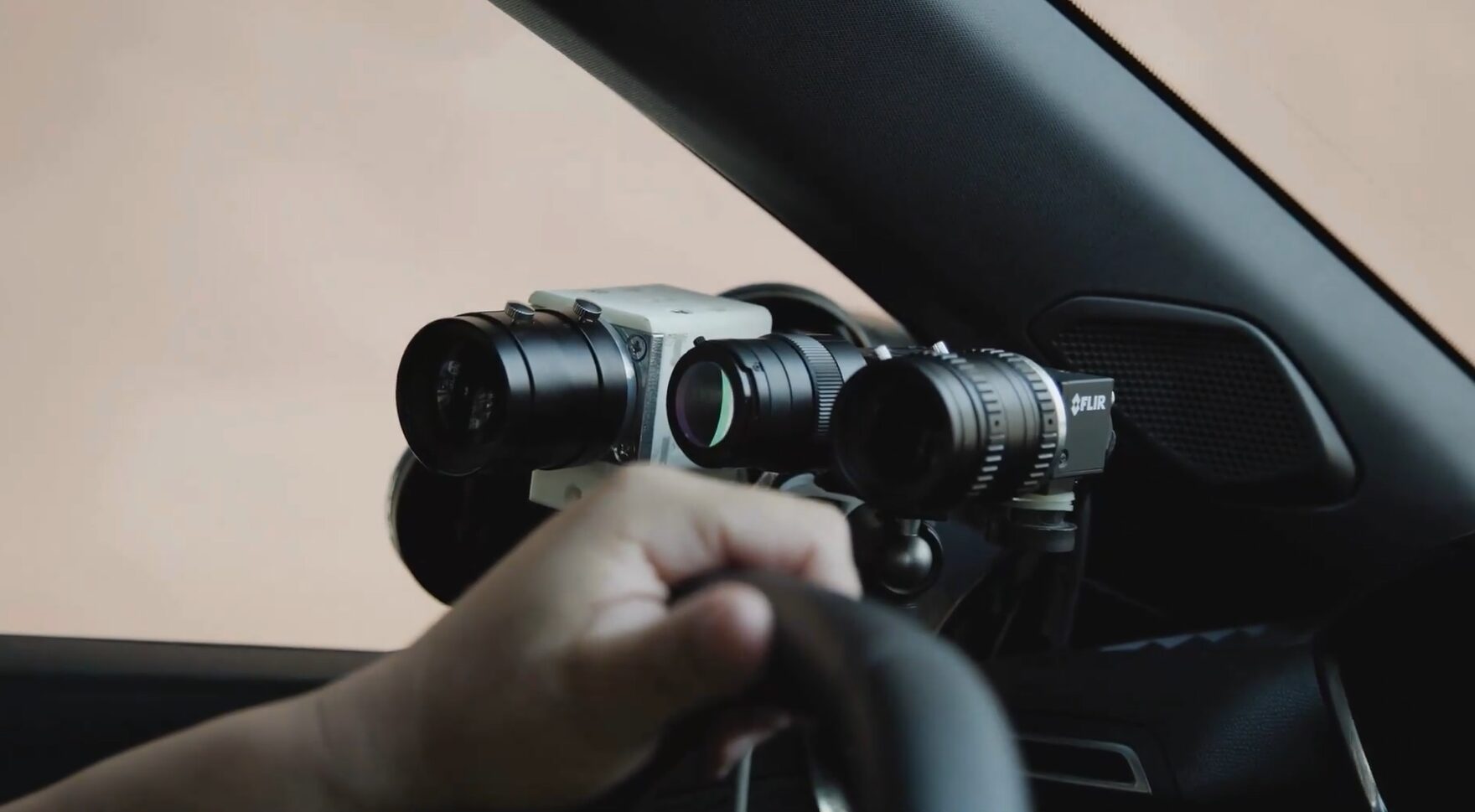
Vitalwise is a demonstrator equipped with high-precision sensors that analyse facial gestures and physiological signals to detect driver fatigue and stress.
Developed by the Institute of Biomechanics of Valencia (IBV), this pilot project has been tested and evaluated under real-life conditions on the city’s streets through the València Urban Sandbox.
The Valencia Urban Sandbox has once again served as a real-world testing environment for an innovative pilot project. On this occasion, the demonstrator is VitalWise, a technology developed by the Institute of Biomechanics of Valencia (IBV) that monitors a driver’s vital signs to identify fatigue and stress levels.
Vitalwise is a system that uses cameras to capture images from which users’ physiological signals and facial gestures are analysed. It can also be synchronised with the vehicle’s telemetry. The software has been trained using high-precision contact sensors, enabling accurate interpretation of drivers’ physiological conditions.
According to Jose Solaz, Head of Innovation in Automotive and Mobility at the IBV, the pilot involved a total of sixty participants of different ages and genders. “We monitored indicators such as heart rate, respiratory rate and blood oxygen saturation for every participant. These measurements allow us to determine the driver’s condition, including their levels of stress, fatigue and emotional state,” he explained.
A real-world testing environment
Paula Llobet, Councillor for Innovation at the Valencia City Council, highlighted the role of the Valencia Urban Sandbox as “once again providing a real-world environment where innovative and efficient ideas and solutions can be tested and validated. In this case, we want to offer the best possible testing conditions. Our streets have enabled the evaluation of a system designed to improve safety and comfort in the vehicles of the future.”
Vitalwise is one of several pilot projects that have been tested through the Valencia Urban Sandbox, which recently celebrated its first anniversary. Over the past year, the initiative has already evaluated twelve demonstrators, while a further five are currently undergoing validation.