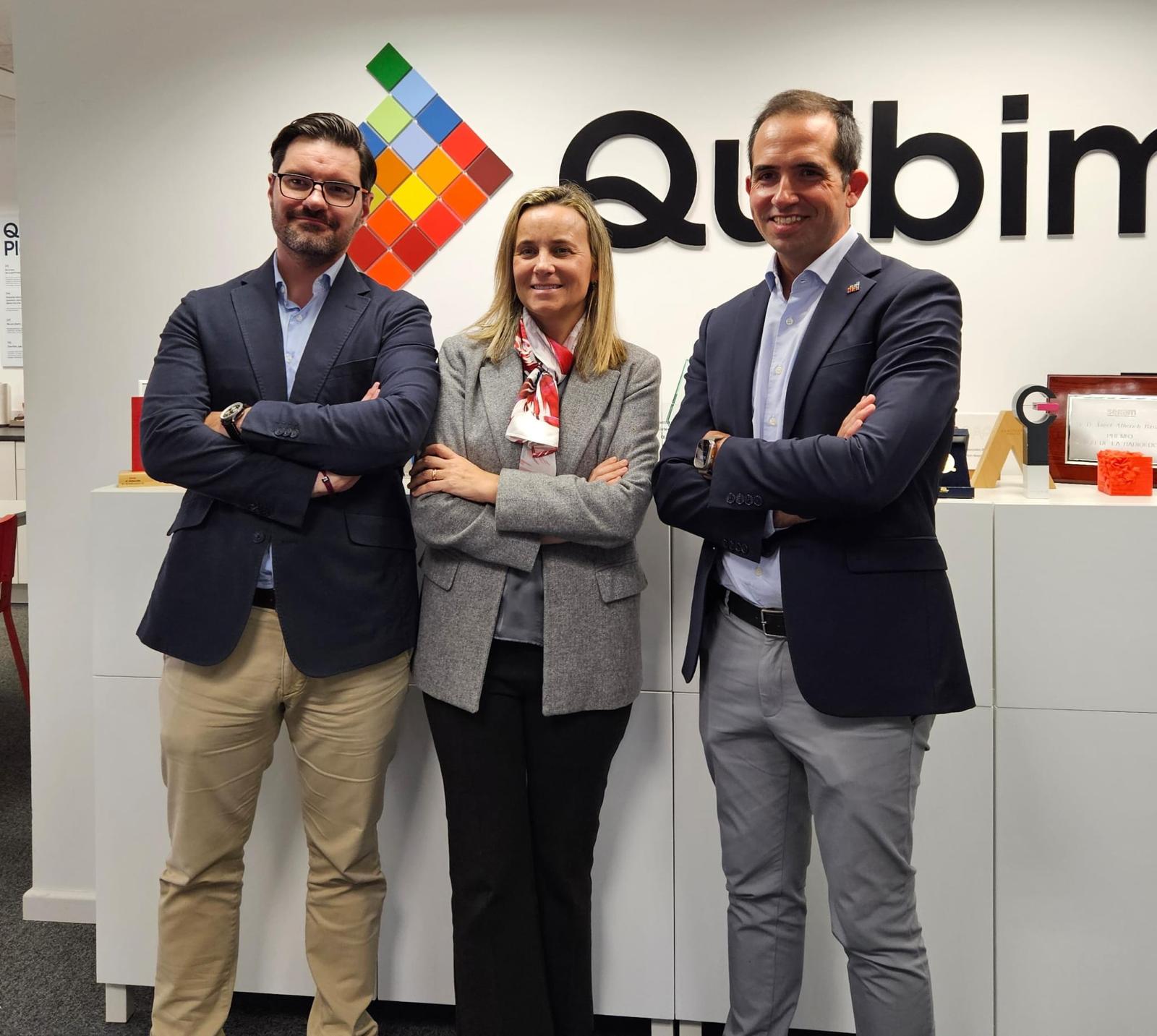
- QP-Breast will integrate magnetic resonance imaging and artificial intelligence for the first time to transform the diagnosis and treatment of breast cancer
- The project is supported by the Valencia City Council, through Valencia Innovation Capital, and by the Generalitat
- The initiative is being carried out in collaboration with leading hospitals to ensure its practical clinical applicability
The City of Valencia, through its “València Innovation Capital” strategy, and the Regional Government of Valencia, through Ivace+i Innovación, part of the Regional Ministry of Innovation, Industry, and Tourism, and the 2021–2027 Valencian Community ERDF Program, are reinforcing their commitment to innovation in healthcare by supporting the development of QP-Breast, a pioneering artificial intelligence-based solution designed to improve the diagnosis and treatment of breast cancer.
The project is led by the Valencia-based company Quibim, which specializes in the analysis of medical images using artificial intelligence, and has received “key” public funding to accelerate its development and facilitate its future integration into the healthcare system.
Paula Llobet, Councilwoman for Innovation and Investment Attraction, emphasized that “the Valencia City Council firmly believes that innovation must serve people—
, especially when it comes to health,” and she added that “supporting the development of QP-Breast means investing in a pioneering solution that can improve early diagnosis and clinical decision-making in breast cancer, offering patients more personalized and effective treatments.”
For his part, Quibim’s CEO and founder, Ángel Alberich-Bayarri, noted that “this initiative demonstrates that when institutions and innovative companies work together, technology becomes a driver of social well-being,” and he explained that “Quibim’s new AI will enable progress toward a more accurate diagnosis of breast cancer, something that can change lives.” “Having the support of the Valencia City Council and the Generalitat not only drives innovation but also reinforces our shared commitment to a public healthcare system that is more efficient, humane, and prepared for the future,” he said.
Specifically, Quibim develops artificial intelligence tools based on medical images, such as MRI scans, to help medical professionals better diagnose and analyze diseases. It is currently working on developing this new solution for patients who have undergone an MRI scan.
“The new tool will enable more accurate diagnoses and will also support professionals in their clinical decision-making by providing them with relevant information about the patient’s response to treatment before she receives it. “In the case of breast cancer, there is currently no solution capable of fully integrating the information provided by MRI scans with advanced AI algorithms,” he added.
It is important to remember that breast cancer remains the leading cause of cancer-related death among women. In Spain, it accounts for 30% of all female cancers and affects 1 in 8 women over the course of their lives. In the Valencian Community, 3,824 new cases were recorded in 2023 alone. And although mammography is the most widely used technique, magnetic resonance imaging (MRI) is essential in complex or high-risk cases, and there are still significant diagnostic and treatment planning challenges that require more advanced solutions.
Institutional collaboration to expedite access to the healthcare system
“QP-Breast will help reduce diagnostic times in complex cases, more accurately characterize the extent of the cancer, facilitate faster and more personalized treatment decisions, and increase the likelihood of response to treatments. Its development is based on real-world data from patients who have already been diagnosed and treated, ensuring clinically relevant results in the future,” Alberich- Bayarri, who also noted that “the support of the Valencia City Council and the Valencian Regional Government is proving crucial in driving the technological and clinical development of this new solution, and in establishing a strategic partnership with leading hospitals, ensuring that the tool is designed based on the real needs of clinical
practice.”
Leading hospitals in the Valencian Community—the Clínico Universitario, La Fe, the Arnau de Vilanova in Valencia, and the Lluís Alcanyís in Xàtiva—are participating in the project, along with the Ramón y Cajal and 12 de Octubre hospitals in Madrid, and the Arnau de Vilanova in Lleida.
Paula Llobet stated that “this public-private partnership strengthens the Valencian Community’s position as a leading ecosystem for healthcare innovation, capable of generating solutions that have a real impact on the population’s health.”