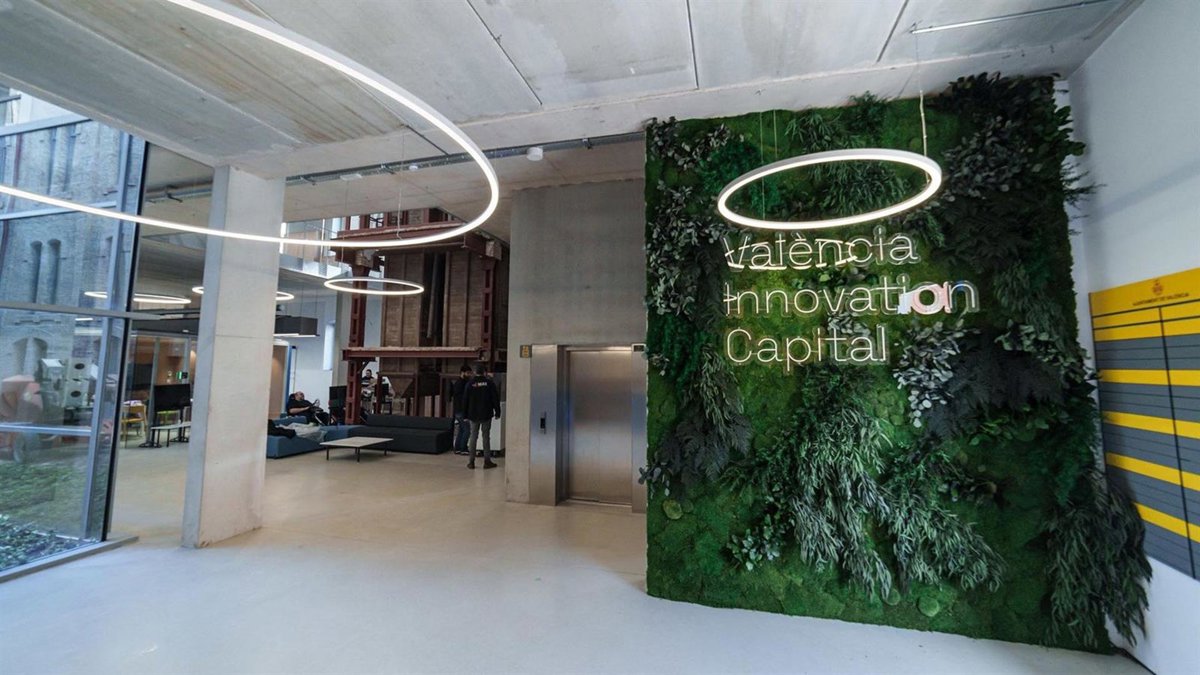
- The city has been named a semifinalist for its model of urban innovation and its commitment to transforming Valencia into a real-world testing ground
- Manchester, Montpellier, Tallinn, Madrid, and Alicante are the other cities in the running for the continental award
Valencia has been selected as a semifinalist for the 2027 European Capital of Innovation (iCapital), a recognition awarded by the European Commission that honors cities that are transforming innovation into a tool to improve citizens’ lives, strengthen their ecosystems, and address major urban challenges.
Valencia’s bid highlights a new way of understanding the relationship between the city and innovation: the right to use the city as a real-world space for innovation. This vision transforms the streets, public spaces, infrastructure, municipal services, and the urban ecosystem itself into an environment for experimentation and learning.
“Being named a finalist for the 2027 European Capital of Innovation is recognition of the work Valencia is doing to make innovation a city policy and, above all, a tool that serves the people,” said Paula Llobet, Councilor for Innovation at the Valencia City Council.
“Our bid is based on a very simple idea: if we want companies, universities, entrepreneurs, and citizens to innovate, we have to make the city a place where they can do so. Innovation can’t be confined to a laboratory; it has to be tested in real life,” added Llobet.
In the final phase, the jury will evaluate the applications based on six criteria: experimentation—that is, the city’s ability to serve as a testing ground for new solutions; ecosystem building, fostering collaboration among government agencies, businesses, startups, universities, civil society, and citizens; governance and facilitation of the innovation ecosystem; scaling up, through knowledge transfer and the replication of solutions in other cities; an innovative vision for the city, with a long-term strategy linked to the green and digital transitions; and citizens’ rights, using innovation to strengthen democracy, inclusion, social cohesion, and equality. These six areas form the framework for Valencia’s application and will serve as the benchmark for evaluating the finalist cities.
One of the key elements of the bid is the Valencia Urban Sandbox, a model that opens up the entire city to innovation and transforms it into a vast urban laboratory for testing solutions under real-world conditions. Spaces, infrastructure, services, and cultural and sporting events are all part of this ecosystem open to experimentation. Of these, more than 150 urban resources have already been pre-approved, facilitating and streamlining the launch of pilot projects.
In less than two years, more than 80 innovation projects have applied to participate in the Valencia Urban Sandbox, and more than 50 have already gained access to this experimental environment to test their solutions under real-world conditions. Furthermore, half of the completed projects have reached the market, according to the results included in the application.
“What matters isn’t just that we have startups or technology; it’s that we’re able to put all that knowledge to work on the city’s real problems. The Sandbox represents exactly that: opening up Valencia to experiment, learn, and turn good ideas into solutions that can reach people,” Llobet explained.
The bid also highlights Valencia’s ability to bring together innovation, investment, talent, knowledge, and public administration. The city boasts an ecosystem comprising startups, companies, universities, technology centers, investors, and specialized organizations, supported by municipal initiatives for financing, acceleration, open innovation, and innovative public procurement.
In this area, the City Council offers programs to support startups and innovative small and medium-sized enterprises, funding for innovation projects, and tools to facilitate the testing of developed solutions and their subsequent integration into public services.
“This bid isn’t just about technology. It’s about what we want Valencia to be: a city capable of attracting talent, creating opportunities, testing solutions, and sharing what we’ve learned with other European cities. Innovation makes sense when it improves services, creates opportunities, and makes our city more sustainable, inclusive, and resilient,” Llobet emphasized.
Another key aspect of the bid is the commitment to sharing and transferring the knowledge generated in the city. Valencia has participated in more than 35 European projects since 2023, mobilizing a total budget of more than 226 million euros, with more than 38 million euros directly attracted to the Valencia region. These projects bring together more than 350 organizations to develop and validate solutions in strategic areas.
The city also participates in international networks and collaborates with innovation ecosystems on different continents. Its Urban Sandbox model is already being shared with other cities, with the goal of facilitating its adaptation and expanding the impact of the knowledge generated in Valencia.
“We want Valencia to be not only a city where innovative things happen, but also a city that helps other cities innovate. Being finalists allows us to share this vision with Europe and demonstrate that urban innovation can become a permanent capability for cities,” Llobet said.
“Reaching the final is already a recognition of the progress we’ve made, but it’s also a responsibility. We want to take advantage of this opportunity to continue opening Valencia up to innovation and to enable more and more people to be a part of it,” Llobet concluded.
With its bid to become the European Capital of Innovation 2027, Valencia is proposing to Europe a new way of understanding urban innovation: making the city an open space to connect knowledge and turn ideas into real impact. This proposal asserts the right of companies, startups, universities, and innovative organizations to use urban resources to innovate. Innovation is thus understood as a public and shared capacity, with governance mechanisms and tools that facilitate collaboration and transform knowledge into solutions that benefit citizens.
The bid is backed by Valencia’s innovation ecosystem, which brings together public administrations, universities, technology centers, companies, startups, investors, and the general public. Among the key players are Valencia Innovation Capital, Invest in Valencia, Startup Valencia, the University of Valencia, the Polytechnic University of Valencia, REDIT, Marina de Empresas—EDEM, Lanzadera, and Angels—Valencia Silicon Cluster, KM ZERO Food Innovation Hub, Ideas UPV, Valencia Digital Summit (VDS), The Terminal Hub, BioHub VLC, and the Valenciaport Foundation, along with other technology and knowledge-based companies and organizations involved in experimentation, technology transfer, and international collaboration.