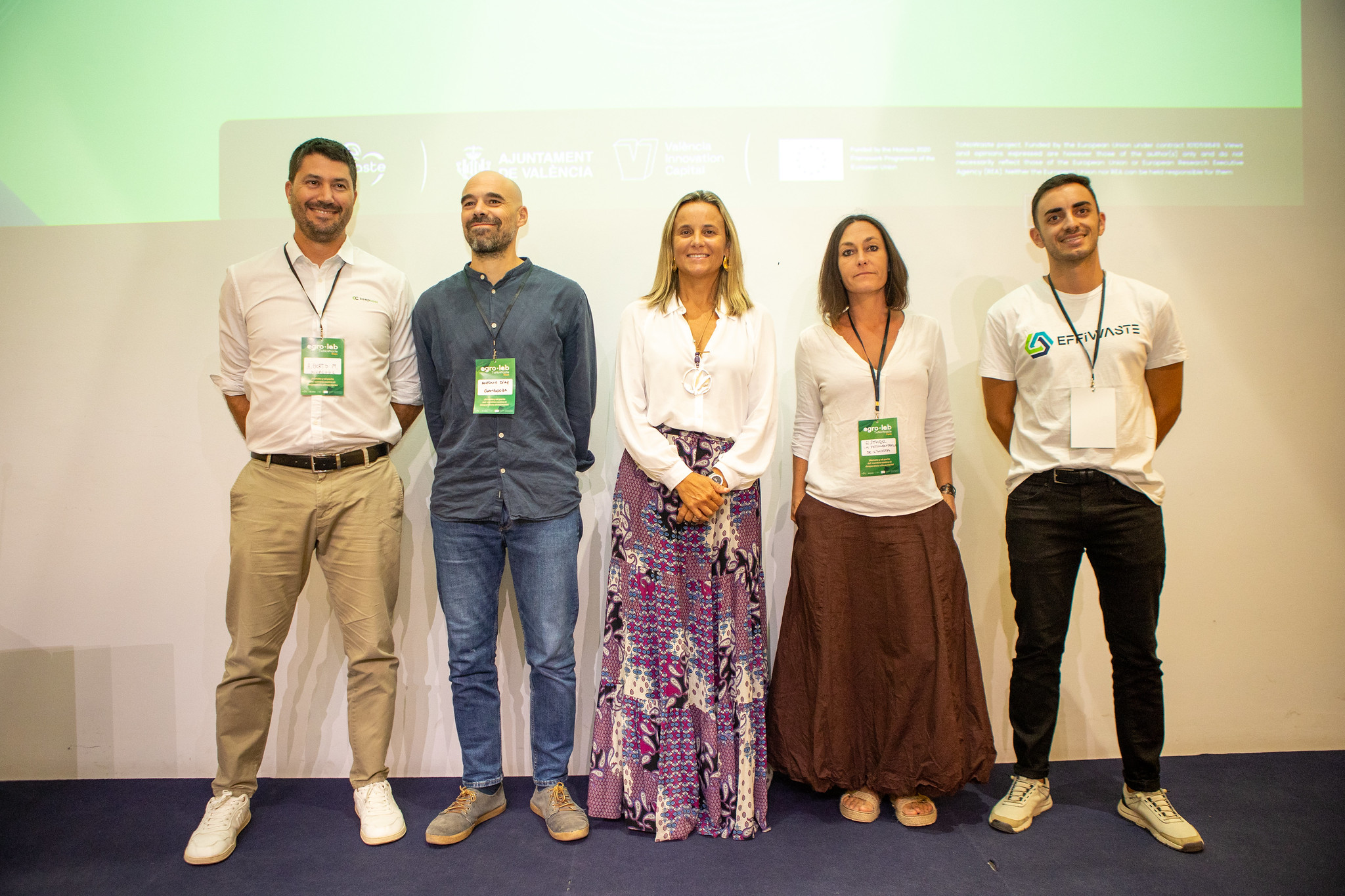
- As part of International Food Loss and Waste Awareness Day, València Innovation Capital and the European ToNoWaste project carried out a street marketing campaign to find out about food consumption and storage habits in the city
- In addition, thanks to the Agro·lab ToNoWaste Accelerator, whose first edition has just concluded, five startups have provided technological solutions such as software for measuring waste in hotels and restaurants, fermentation of vegetables from Valencia’s gardens, and a system that extends the shelf life of fresh food by cleaning the surrounding environment
One-third of all food produced worldwide is lost or wasted between production and consumption, and precisely to tackle this problem throughout the entire supply chain, the City of Valencia, through Valencia Innovation Capital, is participating in the European ToNoWaste project, which works to measure the sustainability of initiatives focused on preventing and reducing food waste.
Based on science, the ToNoWaste project aims to create a system that evaluates actions to combat food waste, targeting all stakeholders in the agri-food system (farmers, industry, small businesses, wholesale markets, school cafeterias, and consumers), as well as the relevant public authorities.
“Every year, nearly 87 million metric tons of food are lost or wasted in the European Union. It’s not enough to tell children to finish their plates or to buy smaller quantities each day. The problem must be addressed at its source,” said Paula Llobet, Councilor for Innovation, Tourism, and Investment Attraction. “That is why the City Council has joined the European ToNoWaste project, alongside other cities, to work on preventing food waste at its source: through decision-making throughout the entire food chain.”
Agro·lab ToNoWaste
As part of the European ToNoWaste project, València Innovation Capital is promoting various initiatives, notably Agro·lab ToNoWaste, the accelerator for sustainable agri-food initiatives. This initiative has just concluded its first edition, which focused on the challenge of food waste, with the participation of five startups that presented innovative solutions to prevent and reduce this problem.
Effiwaste promotes circular gastronomy in the hotel, restaurant, and cafeteria sector through software that measures food waste. Gambooza uses artificial intelligence and computer vision to help the food industry optimize its operations, reduce waste, and improve efficiency through automated image analysis, while KeepCool manufactures solutions to extend the shelf life of fresh foods using eco-friendly processes that fully comply with food safety standards by purifying the air with which the foods come into contact.
For its part, La Fermenteria de l’Horta produces artisanal, unpasteurized vegetable ferments of agroecological and local origin. This is a system for utilizing and preserving food that, in addition to preventing food waste, is completely sustainable. And Remolonas helps the food industry make use of surplus or unsellable products, while offering consumers more affordable and sustainable food options that help them save money on their grocery bills.
Actions to Combat Waste
A very important aspect of reducing food waste is knowing how to store food properly, and for that reason, València Innovation Capital and the ToNoWaste project organized a street marketing event last Saturday—in honor of today’s International Day of Awareness of Food Loss and Waste—in Valencia’s Plaza de la Ciutat de Bruges to raise public awareness.
Through a hands-on challenge, people of different ages and nationalities put their knowledge and food storage habits to the test by simulating everyday situations, such as when we return from grocery shopping or come across food that has expired or appears to be spoiled. Based on their usual practices, they had to place the items in their designated storage areas, such as the refrigerator, freezer, pantry, or various trash and recycling bins.
Although the results were generally quite good, it is true that most participants had doubts about the safety of dairy products whose expiration dates had already passed and about the proper storage of certain fruits and vegetables, such as tomatoes and bananas.
This initiative is part of the pilot project that València Innovation Capital, as part of the European ToNoWaste project, is carrying out together with its other partners (Jaume I University, Mercavalencia, the Valencian Community Federation of Agri-Food Cooperatives, and Cuinatur) specifically to prevent food waste in the city.