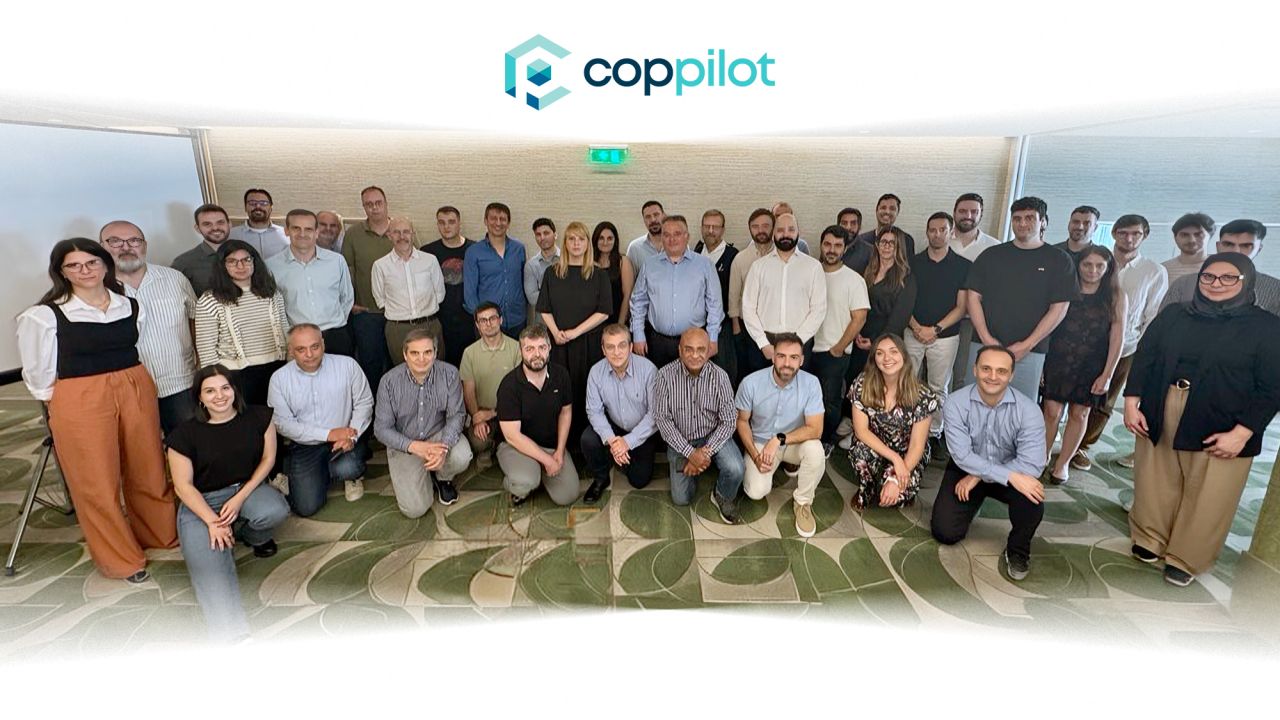
València Innovation Capital participated in the 3rd Plenary Meeting of the European project COP-PILOTproject, held in Athens—a key meeting that brought together the consortium partners to advance the development of digital solutions based on artificial intelligence, IoT, and cloud-edge technologies applied to urban environments.
Over the course of two days of intensive work, the consortium reviewed the project’s progress, shared technical results, and aligned the upcoming milestones with the development of the Open Collaborative Platform (COP), the centerpiece of this European initiative.
In this context, València Innovation Capital has strengthened its role as a hub for urban innovation, helping to coordinate pilot projects, facilitate the exchange of technical knowledge, and validate use cases in real-world settings.
A European project for smarter, more connected cities
At València Innovation Capital, we are proud to be part of the European COP-PILOT project, an initiative that is using artificial intelligence, IoT sensors, and advanced data analysis to improve urban mobility and sustainability in key areas of the city.
COP-PILOT is developing an Open Collaborative Platform (COP) designed to integrate, orchestrate, and manage data and digital services across various sectors, such as mobility, energy, industry, and smart cities. Its approach is based on system interoperability and real-time decision-making based on distributed data.
The goal is clear: to move toward more connected, efficient, and sustainable urban environments, where technology serves as a catalyst for improving the management of public services and the quality of life for citizens.
The Valencia Pilot Project: Technology Applied to the Real City
The pilot project in Valencia is already underway and involves the deployment of smart technologies in several strategic areas of the city and its metropolitan area.
Among the application sites are the Port of Valencia, the Almussafes Industrial Park, the campus of the Polytechnic University of Valencia (UPV), and the La Harinera building. In these locations, sensor and data analysis systems are being implemented to measure variables such as traffic flow, operational efficiency, and indoor thermal comfort.
These use cases make it possible to evaluate, under real-world conditions, how the integration of urban data can optimize mobility, improve infrastructure planning, and promote more efficient resource management.