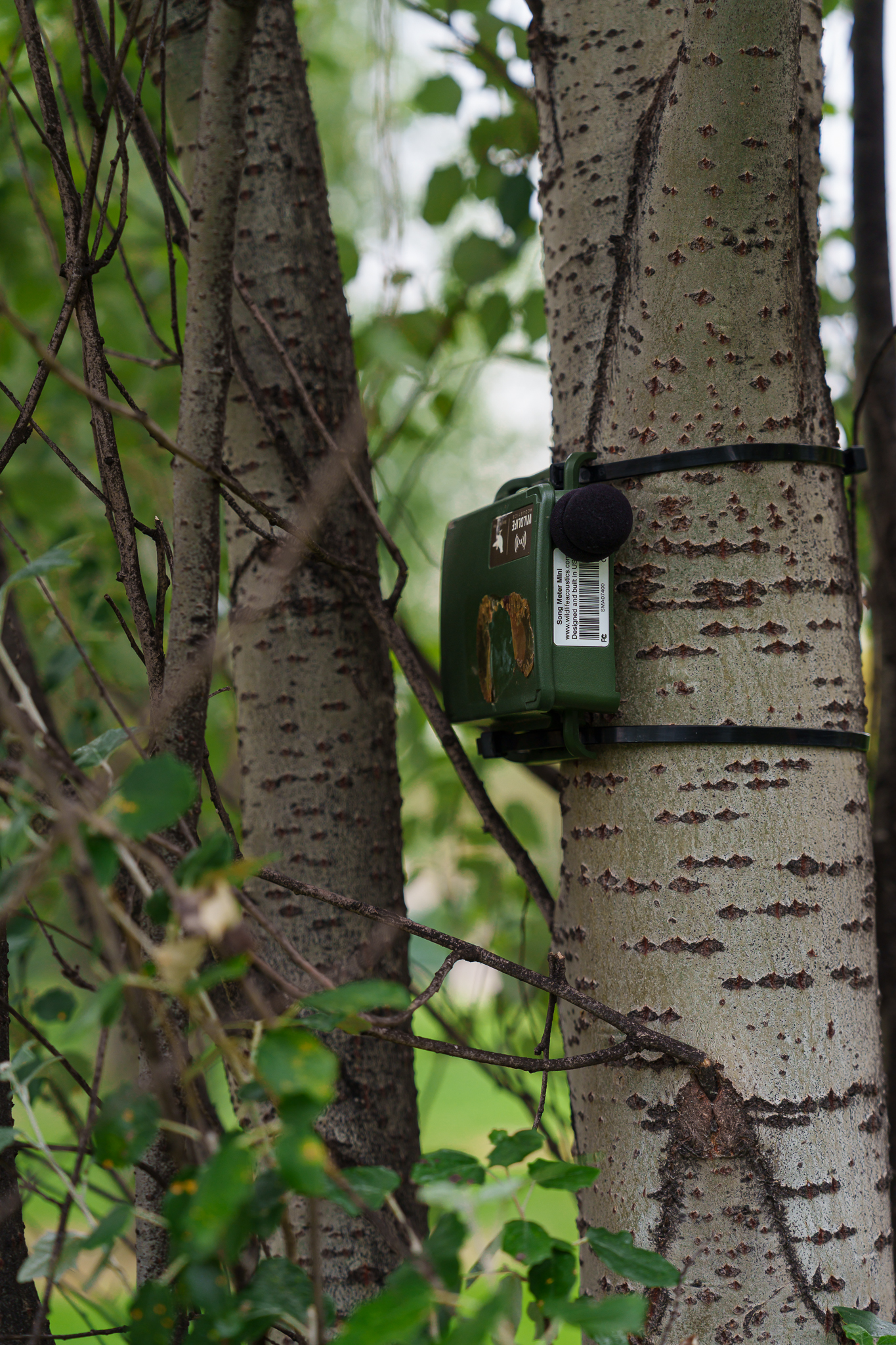
The project, developed in collaboration with the Universitat Politècnica de València (UPV) and tested through the Urban Sandbox, uses acoustic sensors in La Devesa and the Turia Garden to generate real-time biodiversity indicators.
The initiative enables Valencia City Council to make better environmental decisions while providing a public website where citizens can explore detected species and access birdwatching routes.
Valencia City Council and the Institute of Telecommunications and Multimedia Applications (iTEAM) at the Universitat Politècnica de València (UPV) have developed València-BioSoundScape, an innovative project that combines artificial intelligence, acoustic monitoring and Internet of Things (IoT) technologies to analyse urban biodiversity through the city’s soundscape.
During the project, bird activity was monitored across several natural areas of Valencia, leading to the development of a pilot system capable of detecting species in real time. València-BioSoundScape collected acoustic data through monitoring equipment installed at eight strategic locations: five sites in the Turia Garden and three in La Devesa de l’Albufera. The devices recorded the soundscape during periods of peak bird activity—at dawn and dusk—creating a unique database on urban acoustic biodiversity.
The project was carried out in collaboration with the University of Seville and is based on IoT technology, using internet-connected devices that automatically collect and transmit data. The system integrates a microphone, an AI-powered mini-computer, a self-powered battery and mobile connectivity. Its scalable and replicable design will make it possible to extend the technology to additional parks and natural areas beyond the city of Valencia.
Using the collected sound recordings, the system detects bird species through BirdNET, the bird classification tool developed by Cornell University. At the same time,
researchers from iTEAM and the Computer Vision and Behaviour Analysis Lab (CVBLab) at UPV are developing new artificial intelligence models to improve the identification of the species most commonly found across the city.
Project results and birdwatching routes available through a web platform
The results of the project are available through the BioSoundScape online platform. Developed by Artikode Intelligence, the platform allows users to explore detected bird species, listen to their songs, learn about their seasonal presence and access the acoustic biodiversity indicators generated by the project.
The platform also features birdwatching routes designed by SEO/BirdLife (Spanish Ornithological Society), adapted to different seasons of the year. The aim is to promote new ecotourism experiences and environmental awareness throughout the city of Valencia.
Paula Llobet, Councillor for Innovation, highlighted that the project “demonstrates how innovation can help us better understand our natural environment and move towards a more sustainable city. The Urban Sandbox enables innovative solutions to be tested under real-life conditions, positioning Valencia as a benchmark for innovation applied to urban challenges.”
She also stressed that “our collaboration with the Universitat Politècnica de València enables us to develop technologies that create value both for the city and for its citizens.”
About the project
València-BioSoundScape was selected under the 2024 Public Innovation Grants Programme launched by Valencia City Council, under the project title “Ecotourism and Biodiversity in the City of Valencia through Acoustic Monitoring and Artificial Intelligence.”
The project was carried out over an eighteen-month period, from December 2024 to June 2026, and was led by Gema Piñero, researcher at the GTAC Group of the Institute of Telecommunications and Multimedia Applications (iTEAM) at the Universitat Politècnica de València. In addition to iTEAM-UPV, the project involved the Computer Vision and Behaviour Analysis Lab (CVBLab) at UPV, Artikode Intelligence, the Industrial Electronics and Information Technology Group at the University of Seville, and SEO/BirdLife (Spanish Ornithological Society). The installation and management of the acoustic monitoring devices was coordinated through Valencia City Council’s Urban Sandbox service.