- Municipal groups are discussing initiatives aimed at improving metropolitan mobility, preserving public spaces and moving towards a city with more green spaces, public transport and community involvement
- Climate adaptation, animal welfare, the protection of local trade and the regulation of ride-hailing services rounded off a session characterised by proposals aimed at strengthening public services and improving quality of life
- Nine community organisations are taking part in the June plenary session and are putting forward their views on the future of the Paseo García Lorca to the four political groups
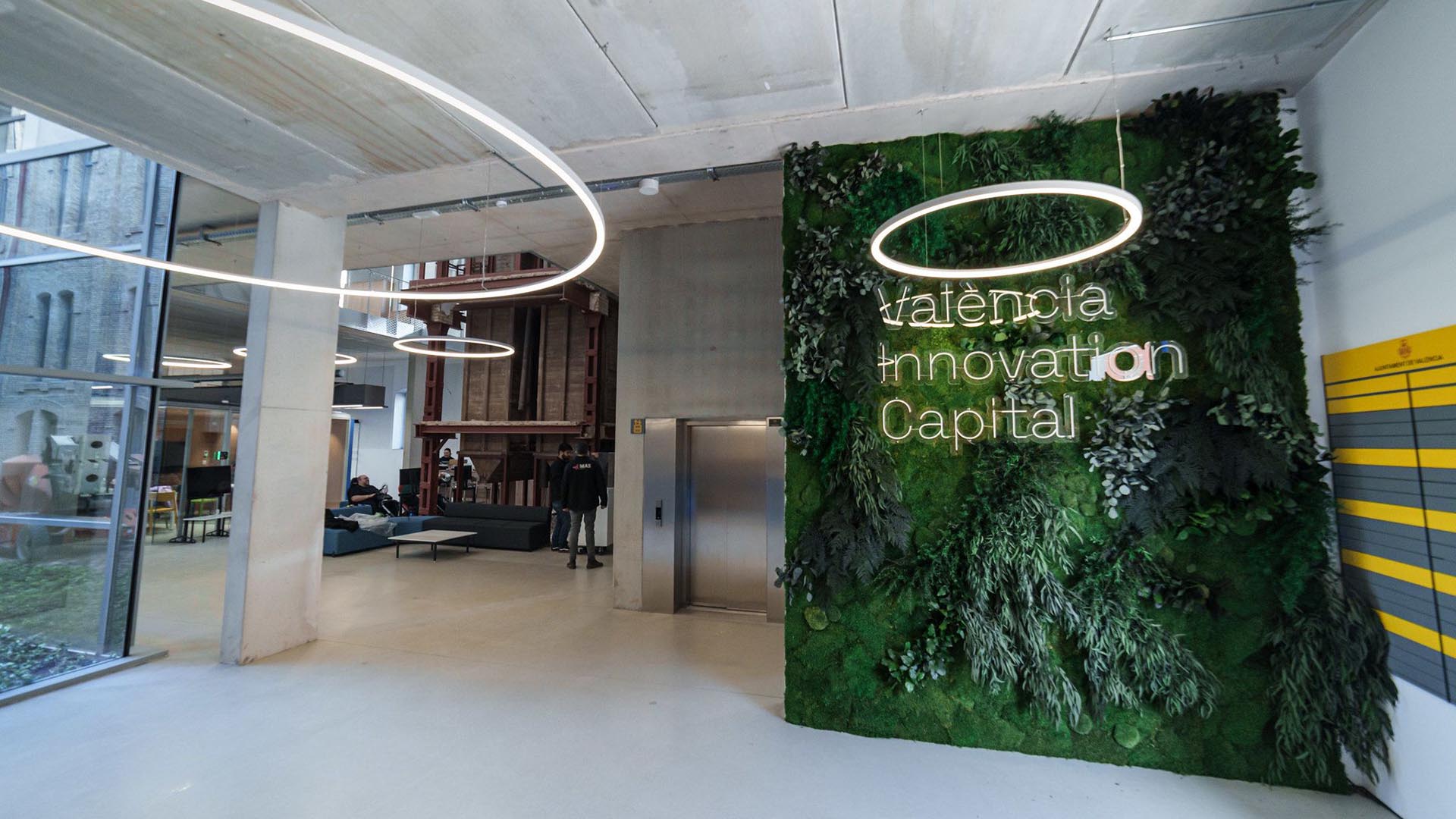
The City Council, with the unanimous support of the four political groups that make up the municipal council, has reaffirmed its backing for the city of Valencia’s bid to become the European Capital of Innovation 2027, at Tuesday’s plenary session for the month of June. The motion was tabled by the Councillor for Tourism, Innovation and Investment Attraction, Paula Llobet, who emphasised that Valencia has established “a track record as an innovative, technological, entrepreneurial, open, sustainable and inclusive city”.
Llobet has described innovation “as a tool for improving quality of life, strengthening public services, creating economic opportunities and tackling major urban and social challenges”. “The figures show we are on the right track: we are the city with the most start-ups per capita in Spain; we want to be at the forefront of AI; we have invested 17 million euros over two years; we have the talent and a City Council fully committed to innovation,” emphasised Llobet.
The plenary agreement highlights initiatives such as València Innovation Capital, the Urban Sandbox, GovTech València, Public Procurement of Innovation, the University-City Partnerships, the Urban Technology Hub and the European projects being developed in the city. It also highlights that, by 2025, Valencia’s innovation ecosystem had exceeded 200 million euros in investment in start-ups, created more than 20,000 skilled jobs and was home to nearly 1,700 active innovative companies. The governing team’s motion concluded with the Plenary’s support for Valencia’s bid to become European Capital of Innovation in the 2027 edition of the iCapital Awards, organised by the European Commission.
Councillor Javier Mateo has offered the Socialist Group’s support for the motion tabled by Paula Llobet, “out of conviction and a sense of responsibility, because innovation is a public policy, a tool for improving people’s lives and tackling urban challenges”. “When the public administration embraces innovation, Valencia moves forward,” said Mateo, who also highlighted the work carried out during previous terms of office.
“This is a city-wide project, not just a council initiative. What matters is the path towards innovation to find solutions to the city’s problems and challenges,” emphasised Pere Fuset, speaking on behalf of the Compromís Group, who warned that political support “is not a blank cheque” and therefore called for “transparency” from the governing team regarding the València Innovation Capital strategy. “What matters is not the chips, but the people,” concluded Fuset.
Sustainable mobility, public space and metropolitan connectivity
Councillor Borja Sanjuán, spokesperson for the Socialist Municipal Group, has called for the creation of a green corridor in the south of Valencia on the land freed up by the railway underground project. Sanjuán emphasised that the city faces “an opportunity comparable to the transformation of the old Turia riverbed” and called for the future García Lorca boulevard not to become a new route for private traffic, but “a linear park that connects neighbourhoods, reduces pollution and improves public health”. “The southern neighbourhoods are the great forgotten ones of the local council,” he emphasised at the start of his speech.
Sanjuán has requested that the mobility study include a specific, comprehensive and comparative analysis of alternatives that would ensure the future green corridor remains “free of through private traffic”. Among these, he has proposed configuring Sant Vicent Màrtir Street with two lanes for private vehicles travelling northbound and a bus lane, diverting southbound traffic via Carrera de Malilla, or maintaining a southbound lane whilst relocating the cycle lane to the green corridor. Furthermore, he has called for the simulations to be redone or supplemented with updated data for Giorgeta and Pérez Galdós; for no final decision to be taken without reports on pollution, noise, public health, road safety, universal accessibility, gender perspectives, children, the climate emergency and social cohesion; and for a genuine participatory process to be launched involving local residents and the organisations affected.
Papi Robles, spokesperson for the Compromís Group on the city council, has highlighted the efforts of local residents’ groups in campaigning for a green corridor in the southern part of the city and has criticised María José Catalá for having “disguised a political move as a technical report; because she wants 20,000 more cars to pass through a place that doesn’t even exist”.
The Popular Group has tabled an alternative motion, which was ultimately approved by the plenary session, urging Valencia City Council to “continue with the processing of the file relating to the development of the Paseo García Lorca, incorporating the dual-lane proposal as the road layout, without prejudice to any amendments that may arise from the representations submitted by neighbourhood associations and other organisations and individuals”. The governing team’s position was defended in the plenary chamber by Jesús Carbonell, Councillor for Mobility, Public Safety and Public Space.
Carbonell has rejected the comparison between the current layout of Blasco Ibáñez Avenue – “with a total of 12 lanes, including parking lanes” – and the plans for the future García Lorca Promenade. Similarly, the Councillor for Mobility has criticised the Compromís and Socialist groups for their actions during the previous term of office regarding the roadworks on Giorgeta and Pérez Galdós avenues.
Citizen participation
Prior to the political debate, representatives from nine neighbourhood associations and community organisations from Malilla, La Raïosa, Sant Marcel·lí, La Petxina, Montolivet, Abastos-Finca Roja, Campanar and La Roqueta took the floor. They all agreed that this urban development project will have a lasting impact on the affected neighbourhoods for many years to come. “We want a greener, friendlier Valencia, but we want neighbourhoods that function properly, without having to put up with building works or temporary changes.” “We want connected neighbourhoods.” “It’s not a question of choosing between improved mobility and more green spaces. Both are compatible.” “We residents are still suffering the disruption caused by ADIF’s works.” “There is a lack of genuine public participation in the railway undergrounding project.” “The trains have divided our neighbourhoods.” “We don’t want 27,000 cars a day on Avenida de García Lorca.” “You’ll be remembered for the gardens you create, not for the roads.” These were some of the remarks made from the guests’ gallery by neighbourhood representatives to the city council.
Also on the subject of transport, Councillor Elisa Valía, of the Socialist Group, raised the issue of the dedicated public transport lane between Valencia and Xirivella in the plenary session. Valía has endorsed the aim of improving metropolitan connections with Xirivella, Aldaia and Alaquàs, but has warned that the alternative chosen by the Regional Government will bring further disruption to neighbourhoods such as Tres Forques and Vara de Quart, which already suffer from high levels of traffic, noise and pollution.
The Socialist proposal urges the Valencian Regional Government to abandon the alternative chosen in the study due to its impact on the Tres Forques neighbourhood and to include alternatives that have not been studied but which would avoid such impacts, as proposed in the Socialists’ submissions. It also calls for immediate steps to be taken to draw up the preliminary study for the new metro line linking Valencia with Xirivella, Aldaia and Alaquàs – a high-capacity solution that would enable progress towards more sustainable and cohesive metropolitan transport.
Councillor Giuseppe Grezzi, speaking on behalf of the Compromís Group, has accused the city council of being “partisan” and “irresponsible” for failing to implement transport policies in the Valencia metropolitan area that would benefit the public.
The Socialist Group’s proposal has been rejected by a majority vote of the governing coalition. Instead, the alternative motion put forward by the Councillor for Mobility, Jesús Carbonell, has been adopted, whereby the Plenary has agreed to “urge the Ministry of Transport and Sustainable Mobility to ensure that the project to double the capacity of Line C3 includes its electrification”.
Urban economy and local shops
The Socialist Group, through Councillor Javier Mateo, has proposed the drafting of a comprehensive plan to support, protect and revitalise local businesses in all of Valencia’s neighbourhoods. The opposition’s motion emphasises that “local businesses are an essential part of the economic and social infrastructure because they create jobs, ensure the provision of everyday services, bring life to the streets, promote urban safety and contribute to the identity of neighbourhoods”. The document highlights challenges such as e-commerce, rising costs, the lack of a new generation of business owners, the loss of commercial diversity and the existence of vacant premises. “Local businesses are struggling; they need concrete action, yet the city council ‘only makes headlines’,” Mateo stated on Tuesday during the plenary session.
The motion, which contains 17 proposals “drafted in collaboration with the city’s shopkeepers”, as highlighted by the Socialist councillor, calls for the development of a Comprehensive Plan for the Support, Protection and Revitalisation of Local Retail, including a neighbourhood-by-neighbourhood assessment, a timetable, a budget allocation, monitoring indicators and a half-yearly evaluation. It also calls for the creation of the Local Trade Council and a one-stop municipal shop to support local businesses; the publication of an up-to-date map of vacant premises, vulnerable high streets and neighbourhoods at risk of commercial decline; the reactivation of closed premises; the strengthening of training, digitalisation and generational succession; the consolidation of the VLC Trade Voucher; to increase grants to traders’ associations; to promote annual awareness-raising and community-building campaigns; to ensure revitalisation campaigns in all neighbourhoods; to improve lighting, cleanliness, maintenance and community policing; and to create a protocol to support businesses affected by public works.
Councillor Ferran Puchades, of the Compromís Group, has endorsed the proposal put forward by the Socialist Group. “We fully endorse it, just as we do the proposal for a one-stop shop for retailers,” he emphasised. “We have always championed the model of local, neighbourhood-based retail and its professionalisation, in the face of predatory large retail chains and major online platforms,” added Puchades, who criticised from the podium “the suspension of aid to retailers” by the current municipal government.
The governing team, represented by the Councillor for Trade and Markets, Santiago Ballester, has tabled an alternative motion – which was ultimately adopted – urging the City Council to “continue to make a firm and tangible commitment to local businesses in the city of Valencia, as a means of fostering community spirit and cohesion in our neighbourhoods”. Councillor Ballester’s proposal, put forward by the Popular Group and ratified by the Plenary Session, includes the creation of a specific voucher scheme for businesses affected by the works on Pérez Galdós and Giorgeta avenues, as well as an increase in the city’s trade voucher budget “by the maximum amount permitted”. “They have understood nothing about local trade, nor do they know how to act as an opposition; we have quadrupled the aid to businesses and have launched a comprehensive recovery plan for the municipal markets,” Ballester reproached the opposition groups. “Everything the opposition is proposing to us has already been done,” concluded the Councillor for Trade and Markets.
A representative of the Trade Union Federation of Valencian Trade Guilds and Associations had previously spoken, stating that “local businesses are essential in Valencia because they create jobs, ensure the provision of services, bring life to the streets and contribute to the cohesion and identity of neighbourhoods”. The spokesperson for local businesses, Mauro Lorenzo Gómez, called for the strengthening of schemes such as the municipal shopping voucher, which he described as “useful”, and proposed that the City Council improve its scope and impact. He also urged the City Council to implement plans to revitalise local trade, given the significant challenges it faces due to changes in consumer behaviour. “There are areas in need of revitalisation, with empty shops and shutters down, which affect neighbourhood life,” he added.
Animal welfare and public administration
Councillor Glòria Tello has tabled a motion to reverse the privatisation of the management of abandoned animals at the municipal centres in Benimàmet and Natzaret. The initiative argues that animal protection and welfare are “a public responsibility of the highest order” and has warned of the risks of outsourcing an essential service, particularly when the contract is awarded to companies whose main activity is not directly linked to the management of animal shelters or protection centres.
The representative of the Compromís Group has called on the City Council to withdraw from or cancel the tender on grounds of public interest and to set in motion the procedures for the full municipalisation of the two centres. Whilst this transfer is taking effect, Tello has called for the management of both centres to be immediately handed over to municipal veterinary staff; for a contract to be put in place before the end of the year with animal welfare organisations based in the city to provide complementary services such as foster homes, adoptions, publicity and dog walking; that an ethics committee be established comprising municipal veterinary staff, legal experts specialising in animal law and animal welfare organisations; and that humane euthanasia, health procedures, vaccinations, worming, feeding, daily monitoring and the feral cat management plan be placed under municipal public supervision. The proposal has also called for a review of the repairs to the Benimàmet centre and the revival of the project for a new centre for abandoned animals. Glòria Tello has criticised the council for the return of the ‘bou embolat’ (a traditional bull-running event) to the districts of Valencia and the presence of circuses featuring animals in the city.
Borja Sanjuán, the Socialist Group’s spokesperson on the council, has supported Compromís’s motion, expressed regret that the successful bidder specialises in pest control, and criticised the council’s treatment of the animal welfare organisation that previously provided the service.
The councillor acting as spokesperson and head of the Animal Welfare Service, Juan Carlos Caballero, has put forward an alternative motion in which he has urged the City Council to reaffirm its commitment “to the protection and responsible care of animals, by promoting measures that guarantee dignified treatment and care in municipal animal shelters”. Furthermore, the text presented by the Popular Group urges municipal services to ensure that health and veterinary procedures in these centres “are supervised and coordinated by municipal vets, ensuring compliance with regulations and animal welfare standards”. Caballero responded to Tello in the council chamber and accused her of spreading “lies, rumours and half-truths”. “It was you who said you were going to privatise the management of the Benimàmet and Natzaret centres” during the previous term of office; and “it was you who left the abandoned animals in the hands of pest control companies”, stated Juan Carlos Caballero.
The plenary session has rejected the motion tabled by the Compromís Group and has approved the alternative text put forward by the governing coalition, comprising the Popular and Vox Groups.
On this issue, during the session set aside for a spokesperson from the La Roqueta Neighbourhood Association, a representative of an animal welfare organisation criticised “the outsourcing of the service, which prioritises cost-saving over animal welfare” and expressed regret that the consortium awarded the contract specialises in pest control. “Protecting abandoned animals is a public duty,” she emphasised.
Regulation of ride-hailing services and support for the taxi sector
Councillor Giuseppe Grezzi has tabled a motion in support of the taxi sector and rejecting the regional framework approved to regulate licences for private hire vehicles (VTC). The representative of the Compromís Group considers that Decree-Law 5/2026 of the Catalan Government has dealt a “real blow” to the taxi industry by removing safeguards such as the minimum advance booking period, reducing administrative control over VTCs and failing to give local councils sufficient powers to regulate traffic, public space and the provision of the service in urban areas.
This motion by the opposition argues that taxis provide an essential public service and has warned that the uncontrolled proliferation of ride-hailing services adds to traffic, disrupts public transport and encourages unauthorised practice and unfair competition. Compromís has therefore called on the mayor to convene a meeting “as soon as possible” with the entire taxi sector to address the situation and convey the local government’s support for their demands. Furthermore, it has called for the Catalan Government to be urged to amend the decree-law in order to effectively regulate private hire vehicle services, protect consumers’ rights and ensure that the public taxi service is provided in accordance with the law and recent case law from the Supreme Court.
The Compromís Group’s proposal was ultimately not adopted. Instead, the Plenary Session approved, with the votes in favour of the Popular and Vox Groups, the alternative motion put forward from the podium by the Councillor for Mobility, Jesús Carbonell. This second text proposes urging the Catalan Government to carry out the technical study required under current regulations, “as a preliminary step towards adopting future regulatory decisions based on objective grounds, leading to the establishment of a balanced framework for the provision of the service to citizens, whilst ensuring the protection of the taxi sector”.
A representative of the Taxi Trade Union Federation of Valencia and its province took the floor and denounced “the unfair situation” facing the taxi sector in the face of the activities “of the black cars, which are private hire vehicles”, according to the latest regional regulations.
Climate adaptation, shade and cooling areas
Pere Fuset, a Compromís councillor, has put forward a motion on adapting Valencia to rising temperatures, creating cooling spaces and improving tree cover and shade. Fuset has warned that the climate emergency is already having a direct impact on public health, particularly amongst children, the elderly, those unable to afford air-conditioning for their homes and the homeless. The councillor has warned that Valencia needs to move beyond mere announcements and implement structural measures to reduce the heat island effect and protect citizens during episodes of extreme heat. “Do something – the situation is extremely urgent; your only plan is to wait for winter to arrive,” Fuset told the Mayor of Valencia, María José Catalá.
The proposal calls for the revival and updating of Valencia’s Tree Plan, the planting of trees in empty tree pits, the introduction of new trees in streets and squares, and the final approval of the Urban Tree Master Plan. It has also called for a shading plan for municipal outdoor sports and educational facilities; to extend the opening hours of municipal swimming pools during the summer until 9.00 pm in July and August, bring forward the opening time to 10.00 am, and extend the season from 1 June to 30 September; to activate a climate emergency plan that extends opening hours and reduces prices or makes access free when the AEMET declares a heatwave alert; and to develop a municipal network of swimming pools with at least one public summer pool per district within three years, as well as installing temporary swimming pools and water leisure areas this summer in under-served neighbourhoods such as Orriols, En Corts, Sant Isidre and l’Olivereta. “More shade, more water and more thought for the city,” concluded the Compromís councillor.
Elisa Valía, a councillor for the Socialist Group, has backed the motion, which includes the creation of a specific protocol to protect homeless people from extreme heat, identifying areas of greatest exposure, training staff at weather shelters, and ensuring ongoing coordination between municipal social services and the department responsible for climate change. Valía criticised the governing team’s “denial of climate change”, accusing them of “paving over everything”, and lamented that the season and opening hours of the municipal swimming pools are not being extended.
In response to the motion tabled by the Compromís Group, the Councillor responsible for Climate Improvement, Acoustics and Energy Efficiency, Carlos Mundina, has put forward an alternative text — approved by the Plenary — in which he proposes that the City Council “continue to promote and develop measures being implemented by the various municipal departments and services and bodies under the City Council’s authority, in the area of heat adaptation, as part of the update to the documents of the València Climate Mission as the main pillar of the city’s strategy in this area”. “This administration has done more for climate adaptation through effective policies than you have in eight years, such as the creation of climate shelters and the installation of public chilled water fountains,” stated Mundina.