July has brought new signs of the growth and specialization that the Valencian innovation ecosystem is undergoing. Startups in Valencia have secured investment to develop technologies in the areas of sovereign cloud, the circular economy, mental health, artificial intelligence, and proptech, while university research has continued to generate solutions for medical diagnostics, agriculture, and automation.
Developments in recent weeks also reveal a growing connection between scientific knowledge, private capital, public investment, and strategic sectors. Valencia is gaining prominence in fields such as space, photonics, artificial intelligence, urban resilience, and sports tech, while expanding opportunities for startups, professionals, and entrepreneurs to access funding, international markets, major events, and real-world testing environments.
New initiatives are driving the sovereign cloud, the circular economy, and digital health
The investment sector saw several significant developments in July. Kumori Systems has closed a 3 million euro funding round to accelerate the development and implementation of its sovereign cloud technology.
The Spanish Society for Technological Transformation (SETT) is participating in the operation, contributing 1.47 million euros. The spin-off from the Polytechnic University of Valencia will use the funds to scale up its technology, strengthen its team, and expand into strategic areas such as defense, security, and critical infrastructure.
Kumori’s proposal addresses an increasingly pressing need for European companies and institutions: to have resilient digital infrastructure that allows them to maintain control over their data, applications, and critical systems. The funding round also strengthens the Valencian ecosystem’s position in technological sovereignty and strategic autonomy.
In the circular economy sector, CoCircular has raised 1.9 million euros in a funding round led by Seven Seas Capital, with participation from Angels Capital, Hortensia Roig, Savana Global, and Zubi Labs.
The Valencia-based startup, which specializes in the digitization, traceability, and circular management of waste, will expand its business model beyond the construction sector to enter new industrial and commercial markets. The company will also enhance its platform with new artificial intelligence capabilities and expects to increase its revenue eightfold over the next few years.
CoCircular has already processed more than 6.3 million metric tons of waste and achieved a recovery rate of over 91%. Its growth demonstrates how sustainability is shifting from regulatory compliance to technological models capable of measuring, optimizing, and verifying the use of resources in increasingly complex value chains.
Mental health has also attracted new investment. Mentelem has closed a 600,000-euro funding round that combines public and private funding and is led by Successful Fund I, FCRE.
The startup will use the funds to develop new artificial intelligence and advanced analytics capabilities, expand its support team, strengthen its sales department, and accelerate its growth in Spain. Its platform combines technology, data, and clinical expertise to identify needs, personalize interventions, and improve emotional well-being within organizations.
The initiative reinforces a growing trend within the ecosystem: the creation of digital solutions that do not seek to replace professional care, but rather to facilitate early detection, improve personalization, and allow specialists to devote more time to patients.
In addition to these transactions, there is the 525,000-euro funding round announced by Baker at the end of June, which has also shaped the investment agenda in recent weeks.
The funding round is led by Draper B1 and includes participation from Angels, Itnig, and AIAIAI Ventures. The startup will use the capital to develop its platform, strengthen its technology and sales teams, and attract larger clients.
Baker bills itself as the first performance marketing agency operated by artificial intelligence agents. Its model uses specialized agents to manage campaigns, generate creative content, build landing pages, analyze results, and carry out optimization processes.
The proposal reflects the emergence of a new generation of companies that incorporate artificial intelligence not only as a support tool, but as a central part of their product, operations, and business model.
New financing options for growing Valencian companies have also been announced. Bewater Funds has launched a new venture capital fund to invest in Inversiva, a proptech company backed by Angels that offers comprehensive real estate investment services.
Inversiva’s clients have already purchased more than 430 properties, with more than 80 million euros invested. The platform has more than 26,000 active investors and has managed more than 7,000 tenants.
The creation of Bewater Funds’ new investment vehicle allows professional investors to tap into the growth of a company that has reached a significant scale and demonstrates the evolution of Valencian startups toward more advanced stages of business maturity.
Artificial Intelligence from Valencia to Transform Medical Diagnosis
The application of artificial intelligence to medical problems has reached a new milestone with the launch of QP-Breast by Quibim.
The solution, available in Europe and the United Kingdom and bearing the corresponding CE and UKCA marks, helps detect breast cancer by analyzing magnetic resonance imaging (MRI) scans. The system automatically identifies suspicious lesions, estimates their risk level, and generates structured information to facilitate the interpretation of the test results.
The technology aims to streamline diagnosis, reduce variability in image analysis, and help healthcare professionals manage a growing volume of scans.
The launch strengthens Quibim’s international standing and demonstrates the Valencian ecosystem’s ability to develop clinical artificial intelligence with real-world applications in hospitals and healthcare systems.
The company’s evolution also reflects the importance of specialization. Quibim has built its growth around advanced medical image analysis, combining clinical knowledge, data, and algorithms to extract information that can be difficult to identify through conventional analysis.
QP-Breast extends this capability to one of the most important areas of cancer diagnosis and demonstrates how technology developed in Valencia can compete in highly regulated international healthcare markets.
Robotics Brings University Research to the Field
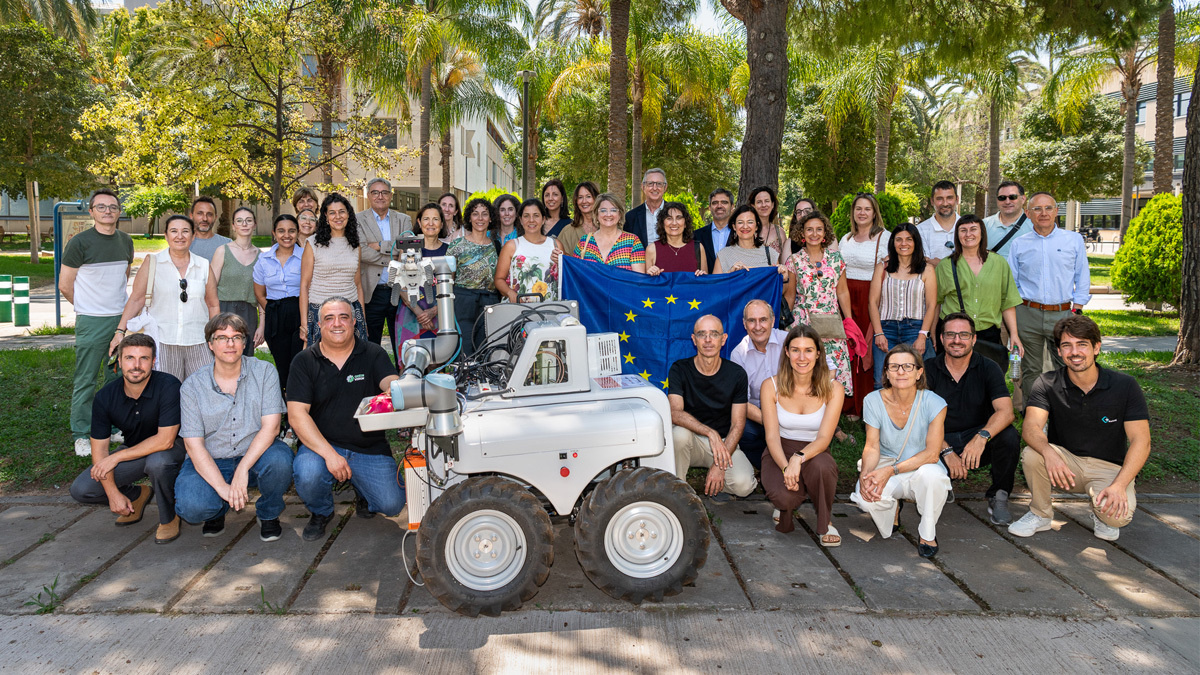
Innovation applied to traditional sectors has led to another notable breakthrough in agriculture. The Polytechnic University of Valencia has coordinated the development of Dragonbot, a robot designed to harvest pitayas and other delicate fruits autonomously, selectively, and without damaging them.
The system uses computer vision to locate the fruit, analyze its condition, and determine the optimal time for ripening. It then plans its movements and carries out the harvest using tools adapted to the fruit’s physical characteristics.
In field trials, Dragonbot successfully harvested more than 75% of the ripe fruit. The results demonstrate the potential of robotics and artificial intelligence to address labor shortages, reduce losses, and automate tasks that until now required particularly careful handling.
The solution also demonstrates the ability of university research to develop technologies that can be applied to specific industry challenges. The automation of delicate agricultural processes opens up opportunities in production, quality control, logistics, and smart crop management.
The project combines expertise in robotics, computer vision, artificial intelligence, and precision agriculture. This convergence makes it possible to develop solutions that can later be adapted to other fruits and production contexts.
Valencia Gains Ground in Space, Photonics, and Artificial Intelligence
The technology ecosystem in the Valencian Community now includes 1,689 active startups, an increase of 11.3% over the previous year.
These trends confirm a growth that is not limited to the number of companies but extends to sectors of increasing economic, industrial, and strategic importance.
Space, photonics, and artificial intelligence are becoming some of the areas with the greatest potential to set the region apart. The presence of universities, research centers, technology institutes, and companies capable of transforming advanced knowledge into commercial products is strengthening Valencia’s position within the European technology economy.
Companies such as PLD Space reflect this consolidation process. Around them, capabilities related to propulsion, advanced manufacturing, semiconductors, photonic circuits, computing, image analysis, and dual-use technologies are growing.
The development of these sectors makes it possible to attract specialized talent, create skilled jobs, and connect the Valencian ecosystem with international value chains in which intellectual property, scientific expertise, and industrial technology play a decisive role.
This trend shows how Valencia is moving from having a few standout technology initiatives to developing a more comprehensive ecosystem in which research, entrepreneurship, investment, and industrial capacity converge.
Valencia Expands Its Business and International Connections
Valencia’s ability to attract international business activity has also continued to grow. Invest in Valencia has supported the establishment of 16 new international companies during the first half of 2026, with an estimated investment of more than 35 million euros.
Since its launch, the office—established by the Valencia City Council and Cámara Valencia—has facilitated the arrival of 93 companies from 29 countries, attracted more than 400 million euros in investment, and helped create more than 4,000 direct jobs.
Attracting international investment helps bring new companies into the business community, expand job opportunities, and strengthen the ecosystem’s connections with other markets. It also generates potential customers, partners, and collaborators for startups, universities, technology centers, and local suppliers.
This international reach is also reflected in VDS’s growth. The VDS 2026 Call for Speakers has received more than 1,450 applications from 82 countries—the highest number in its history and nearly 32% more than in the previous call.
Founders, executives, investors, technology experts, and representatives of international organizations have submitted proposals to participate in the program, which will take place on October 21 and 22 at the City of Arts and Sciences.
The VDS Startup Competition has also selected its 50 semifinalists after evaluating a record 1,560 applications from 87 countries.
The selected companies are now moving forward to choose the 25 finalists who will present their projects to investors, corporations, and technology leaders during VDS.
The solutions cover areas such as artificial intelligence, digital health, climate technologies, advanced manufacturing, fintech, cybersecurity, mobility, and next-generation infrastructure.
The volume and diversity of the applications reinforce VDS’s ability to connect the Valencian ecosystem with projects, talent, investment, and expertise from various international markets.
New opportunities for startups, talent and open innovation
The call for proposals calendar offers various avenues for accessing funding, internationalization, professional experience, technology validation, and connections within the ecosystem.
On September 24 and 25, the City Resilience Hack will bring together startups, entrepreneurs, professionals, and multidisciplinary teams at the Energy Discovery Center in Tallinn to develop solutions for emergencies, crises, and disruptions to essential services.
Valencia is participating in the initiative alongside Tallinn, Helsinki, Dnipro, and Lviv. The teams will work with municipal representatives and international experts in areas such as emergency management, critical infrastructure, cybersecurity, data analysis, health, logistics, and public services.
Projects will be eligible for a total prize pool of 75,000 euros, as well as subsequent opportunities for acceleration, pilot testing, and networking with institutions and companies. The call for proposals will remain open until September 10.
The call for applications to join the VDS 2026 NextTalent Crew offers the opportunity to experience the event from the inside, gain hands-on experience, and connect with startups, investors, corporations, and international professionals.
NextTalent is VDS’s talent platform, powered by Startup Valencia. It is aimed at students, professionals in the early stages of their careers, and people in the process of changing careers who want to gain insight into the tech and entrepreneurial sectors.
This experience allows you to help organize one of the leading international technology events, gain insight into its inner workings, and become part of a community focused on talent and professional opportunities.
València Innovation Capital has also launched a call for applications to send up to 24 Valencian startups to Web Summit Lisbon 2026.
The selected companies will participate in Startup Island in Valencia and will have an exhibition space for one day, credentials, visibility in the event’s promotional materials, and access to the event’s networking tools.
Web Summit Lisbon will take place November 9–12 and will provide an opportunity to connect with investors, corporations, potential partners, the media, and international technology companies. The deadline for submitting applications is September 6.
On September 5, Valencia will host DLD Sports 2026, an international event that will bring together leaders from the worlds of sports, technology, investment, science, and culture.
The event will examine the application of artificial intelligence to sports, human performance, new investment models, and the evolution of the sports industry as a space where technology, entertainment, health, and capital converge.
In the area of business support, EMPYME 2026 offers grants to entrepreneurs and small and medium-sized enterprises (SMEs) in the Valencian Community who are launching or consolidating business projects.
Grants may cover up to 70% of eligible expenses, with a maximum amount of 15,000 euros per project. Eligible expenses include workspace rentals, payroll costs, and certain professional services related to business operations.
The deadline for submitting applications is July 31.
For its part, EMDANA 2026 aims to contribute to the economic recovery of the municipalities affected by the DANA by supporting new business projects.
The program is aimed at entrepreneurs, self-employed individuals, and small and medium-sized enterprises (SMEs) operating in the areas covered by the call for applications. Grants can reach up to 20,000 euros per application and can be used to cover expenses related to the development and consolidation of the business.
The application period will run from September 15 to September 30.
Sports also offer new opportunities for technology companies. The Groundbreakers Pitch Sessions are aimed at sports tech startups that want to present their solutions to sports organizations, investors, and innovation teams.
The call for proposals seeks projects in areas such as digital monetization, injury prevention, audiovisual rights, sports tourism, the fan experience, performance, and access to funding.
The selected startups will participate in the GSIC Summit Valencia 2026, which will be held on October 7 and 8.
The event, organized by the Global Sports Innovation Center powered by Microsoft, will bring together startups, investors, sports organizations, technology companies, institutions, and innovation leaders from various countries.
The program will provide insight into the latest trends in sports tech, generate business opportunities, and connect the solutions developed by startups with stakeholders who can validate, fund, or integrate them into the industry.
An ecosystem that turns specialization into growth potential
July confirms that the Valencian ecosystem continues to move toward a phase of greater specialization, maturity, and international connectivity. The new funding rounds demonstrate the ability to attract capital to technologies developed in Valencia, while the progress made by Quibim, Kumori Systems, and Dragonbot reflects the diversity of fields in which scientific and technological knowledge is reaching the market.
The sovereign cloud, the circular economy, artificial intelligence, digital health, robotics, space, photonics, urban resilience, and sports tech are no longer viewed as isolated initiatives. They are beginning to form part of a structure where public and private investment, university research, entrepreneurship, large companies, and institutions converge.
Open calls for proposals also expand opportunities for startups, professionals, and entrepreneurs to access funding, validation opportunities, international events, and new collaboration networks.
The challenge will be to translate this growth into more companies capable of scaling up, skilled jobs, technology transfer, and solutions applicable to industry, government, and the public. The developments in July show that Valencia continues to build the capabilities needed to move in that direction.