● Las Naves, La Mutant, and La Harinera have brought together hundreds of professionals, companies, investors, researchers, and startups to tackle the major challenges facing the food industry.
● Paula Llobet emphasizes that agri-food innovation is a key municipal strategy for boosting competitiveness, creating jobs, and generating new opportunities for Valencia.
● The City Council will soon open the València Food Lab in Las Naves, a space for developing, testing, and validating innovative solutions for the sector.
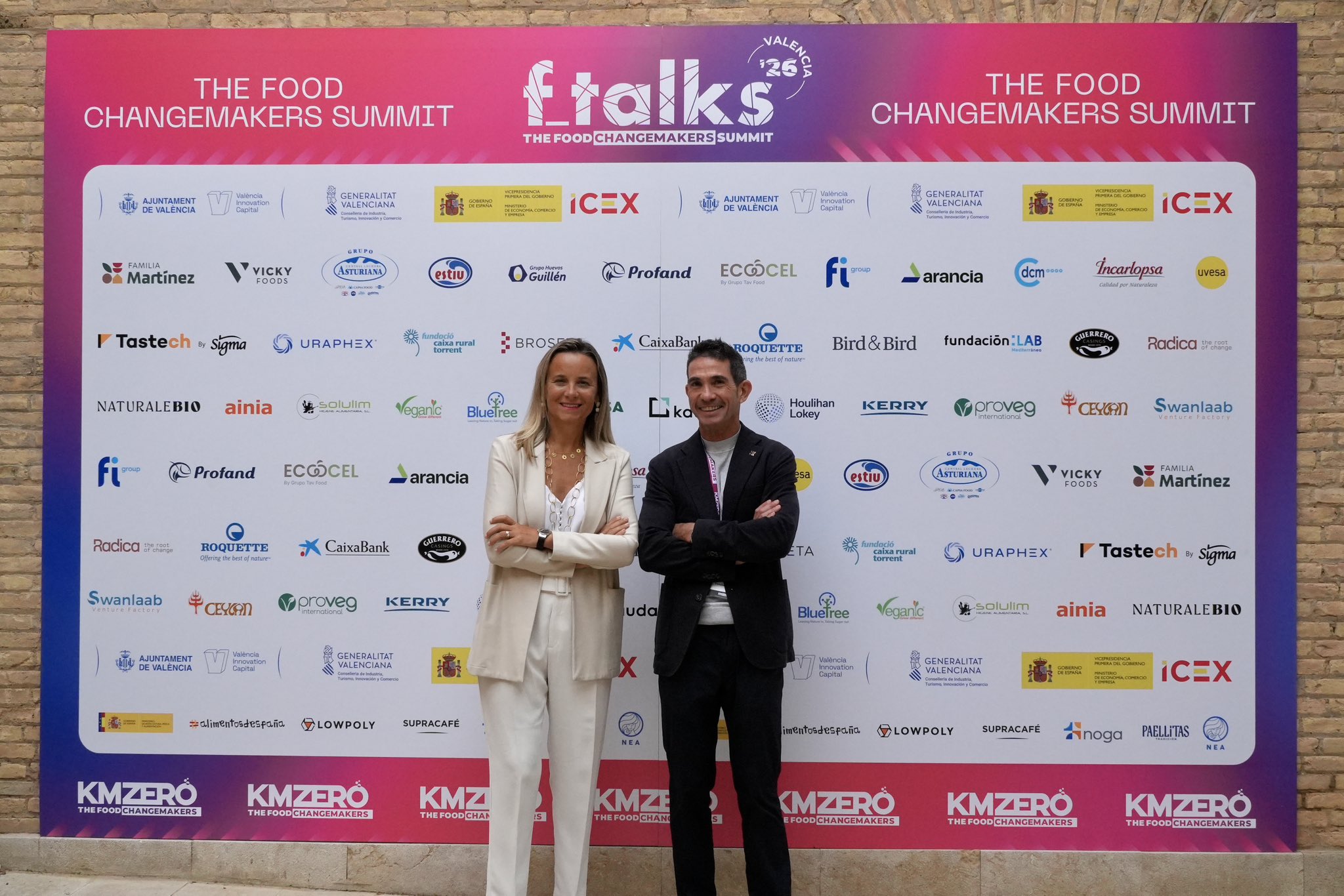
The Valencia City Council has strengthened its support for the agri-food sector by hosting the eighth edition of the ftalks Food Summit, the international forum organized by KM ZERO Food Innovation Hub that places the city at the center of the debate on the future of food.
Paula Llobet, Councilwoman for Tourism, Innovation, and Investment Attraction, participated in the official opening ceremony alongside Carlos Mundina, Councilman for Climate Action and president of València Sostenible, and the Director General of Entrepreneurship and Internationalization for the Valencian Regional Government, Mónica Payá.
“Valencia is once again becoming the meeting place for those who are shaping the future of the food industry. Hosting ftalks allows us to connect companies, startups, researchers, and investors, foster new collaborations, and provide our business community with solutions that can improve their competitiveness and their ability to respond to the major challenges facing the sector,” said Llobet.
The councilwoman emphasized that “the agri-food sector is a strategic priority for the City of Valencia. We want to combine our agricultural tradition and our productive capacity with the scientific, technological, and entrepreneurial talent found in Valencia to improve production, use resources more efficiently, and move toward healthier, safer, and more sustainable food.”
Three municipal spaces to connect knowledge and innovation
Las Naves, La Mutant, and La Harinera served throughout the day as three complementary venues for hearing from international speakers, exchanging knowledge, and fostering connections among the various stakeholders in the value chain.
The participation of Fuad Gasi, coordinator of the Svalbard Global Seed Vault at the Nordic Genetic Resource Center (NordGen), has generated particular interest; he shared his experience and knowledge regarding the role of seeds in building more resilient food systems.
His visit this year holds special significance, as the Svalbard Global Seed Vault has been awarded the 2026 Princess of Asturias Award for International Cooperation for its work to safeguard crop diversity and preserve an essential resource for future generations. It currently houses more than 1.3 million seed samples.
“It is a privilege to have in Valencia one of the voices working every day on a project that demonstrates how science, international cooperation, and innovation can help protect the future of our food supply,” Llobet emphasized.
Other participants in the event included plant genetics expert Howard-Yana Shapiro; Marco Gallo, Chief Business Officer of The Longevity Kitchen; and Maha Tahiri, a former executive at companies such as General Mills, Danone, Coca-Cola, and Mars, among others.
A vital sector for the Valencian economy
Municipal support for ftalks is rooted in the economic, social, environmental, and regional significance of the agri-food sector. The Valencian Community is the third-largest region in Spain in terms of the agri-food sector, and this sector accounts for approximately 12% of the region’s employment.
“Valencia’s relationship with food is part of our identity, our economy, our landscape, and our culture. The huerta, l’Albufera, its rice paddies, and its fishing industry make up an extraordinary heritage and also a foundation upon which to innovate and build the future,” said the councilwoman.
Llobet also emphasized that hosting this forum helps raise the city’s international profile, attract talent and investment, and strengthen an entrepreneurial ecosystem that includes 1,689 startups and attracts more than 200 million euros in annual investment.
València Food Lab and the City as a Testing Ground
During her remarks, Paula Llobet noted that the City Council will soon open the València Food Lab at Las Naves, the new food innovation lab launched through València Innovation Capital.
The space will enable the development, testing, and validation of solutions aimed at transforming the agri-food system and will be open to companies, startups, universities, research centers, culinary professionals, and other stakeholders in the value chain.
“The València Food Lab embodies the model of innovation we advocate: open, collaborative, and connected to the real needs of businesses, the region, and people. We want to turn ideas into solutions that promote well-being, competitiveness, and opportunities,” explained the city councilwoman.
This strategy, part of the València Innovation Capital initiative, is complemented by the Valencia Urban Sandbox, which transforms the city into a real-world testing ground for startups, companies, universities, and technology centers.
This tool opens the door to testing solutions related to food production and distribution, traceability, logistics, the efficient use of resources, and the reuse of waste.