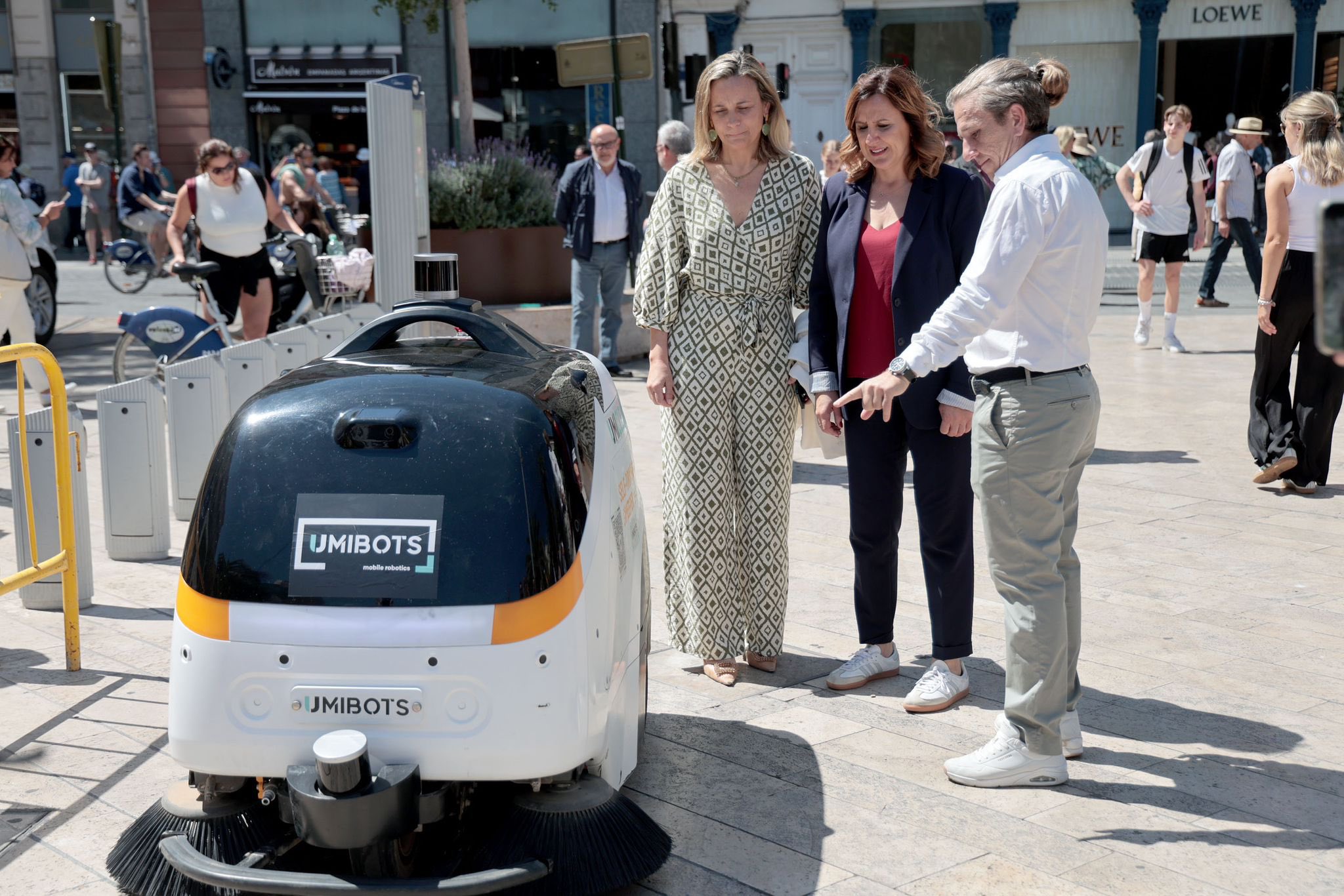
This instrument, promoted by València Innovation Capital, has received 75 applications, facilitated the implementation of 48 projects, made over 150 urban resources available to the ecosystem, and authorized 98% of the projects presented.
The initiative has transformed the city into a living laboratory for testing innovative solutions in real environments.
Collaboration between companies, universities, technology centers, and the administration has also been strengthened to accelerate the market arrival of innovation and improve public services.
Councilor Paula Llobet emphasized: “the Urban Sandbox has made the right to innovate a reality.”
More than 170 cities and territories have learned about the Valencian model of urban experimentation, which has already become an international reference in public innovation.
The València City Council celebrates the second anniversary of the Urban Sandbox, a pioneering initiative that has consolidated the city as a European benchmark in urban experimentation and has enabled the implementation of nearly 50 innovative projects in areas such as sustainability, mobility, digitalization, health, culture, and security. During these first two years, the Sandbox has received 75 access applications, authorized 98% of the projects presented, and facilitated the development of 48 pilots, 9 of which have already been completed.
The accumulated experience reflects the consolidation of a strategic tool of the València Innovation Capital initiative, conceived to allow companies, universities, technological institutes, and administrations to test innovative solutions in real conditions, using the city itself as a validation environment. València has
made over 150 urban resources available to the ecosystem, including spaces, infrastructures, events, and data platforms, transforming innovation into a shared city capacity.
Additionally, the Sandbox has brought together 48 participating entities, of which 36 are companies, 7 are technological institutes, 3 are public sector organizations, and 2 are universities. One in four initiatives is developed in collaboration between several organizations, demonstrating the strength of a model based on cooperation between administration, scientific knowledge, the business fabric, and citizens.
The Right to Use the City for Innovation
The Councilor for Innovation, Paula Llobet, highlighted that these two years “demonstrate that innovation is much more effective when it opens up to the city and is developed alongside those who know its real needs. The Urban Sandbox has made the right to innovate in València a reality, removing barriers and facilitating that companies, universities, and technology centers can validate solutions with a direct impact on citizens. It is a new right for the Spanish and European innovative ecosystem: the right to use the city for innovation.”
Llobet underlined: “it has consolidated itself as a reference space for accelerating the development of technological solutions with a positive impact on the city, its public services, and the quality of life of citizens. We have transformed València into a living laboratory of reference in Europe. We are not only attracting talent, projects, and investment, but we are also generating useful knowledge to improve public services and respond to the great urban challenges of our time, from sustainability and climate to mobility, security, and digitalization.”
An Ecosystem to Accelerate Innovation
The Innovation Service of the València City Council has prepared a report for this biennial period, in which we observe that during these two years, the areas with the most activity have been environment and bioeconomy, which account for 26.5% of the projects, followed by culture, creativity, and social inclusion (18.4%), digitalization and telecommunications (16.3%), energy and mobility (14.3%), and security for society (14.3%).
The most prevalent technologies have been sensor technology, algorithms, the Internet of Things, artificial intelligence, digital platforms, and robotics.
An Administration Allied with Innovation
The biennial report also highlights the significant effort made by the municipal administration to facilitate experimentation. During this period, more than 152 support actions for the ecosystem have been developed, 62% of resolutions have been processed in less than three months, and the average response time has been 90 days, below the maximum stipulated in the regulatory ordinance.
Likewise, the list of available urban resources has grown by more than 40%, incorporating new spaces and infrastructures at the proposal of the innovative ecosystem itself and reinforcing the City Council’s role as a facilitator of urban innovation.
Real Impact and Learning for the City
The results obtained show that experimentation generates value for both participating entities and the city. The passage through the Sandbox has allowed the innovative ecosystem to advance 11 accumulated levels of technological maturity (TRL), achieve an average utility rating of 7.75 out of 10, and register a satisfaction of 8 out of 10 among participating entities. Furthermore, one in four completed innovations has already reached the market.
The experience has also transformed the Sandbox into a normative learning tool. During these two years, eight areas for legal and regulatory improvement have been identified, related to issues such as autonomous mobility, public space management, data usage, or experimentation in heritage environments, contributing to adapting regulatory frameworks to the challenges of urban innovation.
In parallel, the Valencian model has attracted interest both within and outside Spain, sharing knowledge with more than 170 cities and territories and generating over 465 media impacts and more than 210 publications on social media.