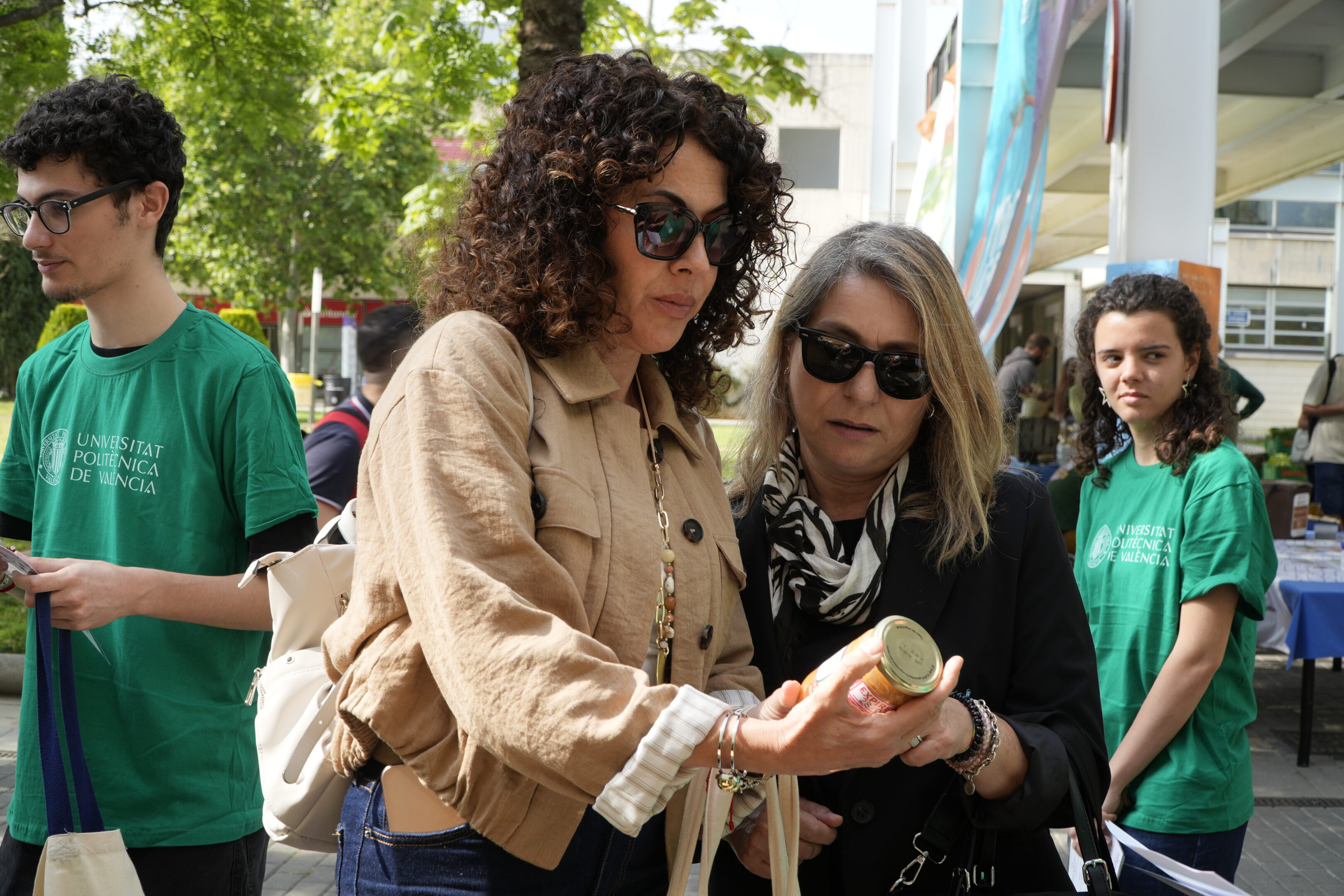
To mark the International Day of Awareness on Food Loss and Waste, observed every September 29, València Innovation Capital presents the DIY Toolkit developed as part of the European ToNoWaste project. This free resource uses games to teach users how to better preserve food, make the most of it, and foster more responsible consumption habits.
Reducing food waste starts with small, everyday actions
Did you know that some food waste could be prevented simply by storing food more properly?
Every September 29, we celebrate the International Day of Awareness of Food Loss and Waste, a day that invites us to reflect on how our everyday decisions influence the sustainability of the food system. Planning your shopping, storing food properly, and making better use of the food we have at home are simple actions that can make a big difference.
Precisely to promote these changes in habits, València Innovation Capital is participating in the European ToNoWaste project, an initiative that promotes new tools, knowledge, and strategies to prevent food waste and move toward more sustainable food systems. The project focuses on innovation and collaboration among government agencies, social organizations, businesses, knowledge centers, and the public to bring about real change in the way we produce, consume, and utilize food.
Preserve Better to Waste Less
Food often ends up in the trash not because we buy more than we need, but because we don’t know the best way to store it. Which foods should be kept in the refrigerator? Which ones keep better in the pantry? How can we extend their shelf life?
To address these questions in a practical and participatory way, ToNoWaste has promoted various public awareness initiatives that bring what people learn into their daily lives. These include participatory street marketing activities held in September 2025 and April 2026, during which a mock kitchen was transformed into an interactive learning space where participants had to decide how to store different foods to extend their shelf life and prevent them from becoming waste.
A practical resource for learning and taking action
This experience gave rise to the DIY Toolkit “Create Your Own Game to Fight Food Waste at Home,” an educational resource promoted by València Innovation Capital in collaboration with Science for Change, which allows this activity to be replicated in schools, social organizations, libraries, associations, and community spaces.
The toolkit offers a practical and participatory way to reflect on our decisions regarding food purchasing, preservation, and use, helping us adopt more responsible habits through play. It is also designed so that any organization or group can use it independently as an awareness-raising tool, facilitating educational and community activities tailored to different audiences.
A global challenge that begins at home
Food loss and waste are among the major environmental, economic, and social challenges of our time. Beyond the resources that are lost, food waste has a direct impact on the sustainability of food systems and on our ability to move toward more sustainable production and consumption models.
For this reason, the International Day of Awareness on Food Loss and Waste highlights the need to act collectively, involving public administrations, businesses, social organizations, and the general public. However, it also reminds us that many of the solutions begin with small, everyday decisions: planning our shopping better, storing food properly, or making the most of the food we already have at home.
In this context, initiatives such as ToNoWaste provide citizens with practical tools and useful knowledge to encourage changes in habits that contribute to building more sustainable food systems.
Download the toolkit and organize your own event
To coincide with International Food Loss and Waste Awareness Day, ToNoWaste invites schools, associations, libraries, social organizations, and the general public to launch their own awareness-raising activities.
Download the free DIY Toolkit “Create Your Own Game to Fight Food Waste at Home” and organise your own activity to learn, teach, and promote more responsible consumption habits through play. Because storing food properly, planning your grocery shopping, and making the most of what we already have are simple actions that can have a positive impact on our environment and help build more sustainable food systems.